






What Is Agentic Customer Engagement? The Complete 2026 Guide
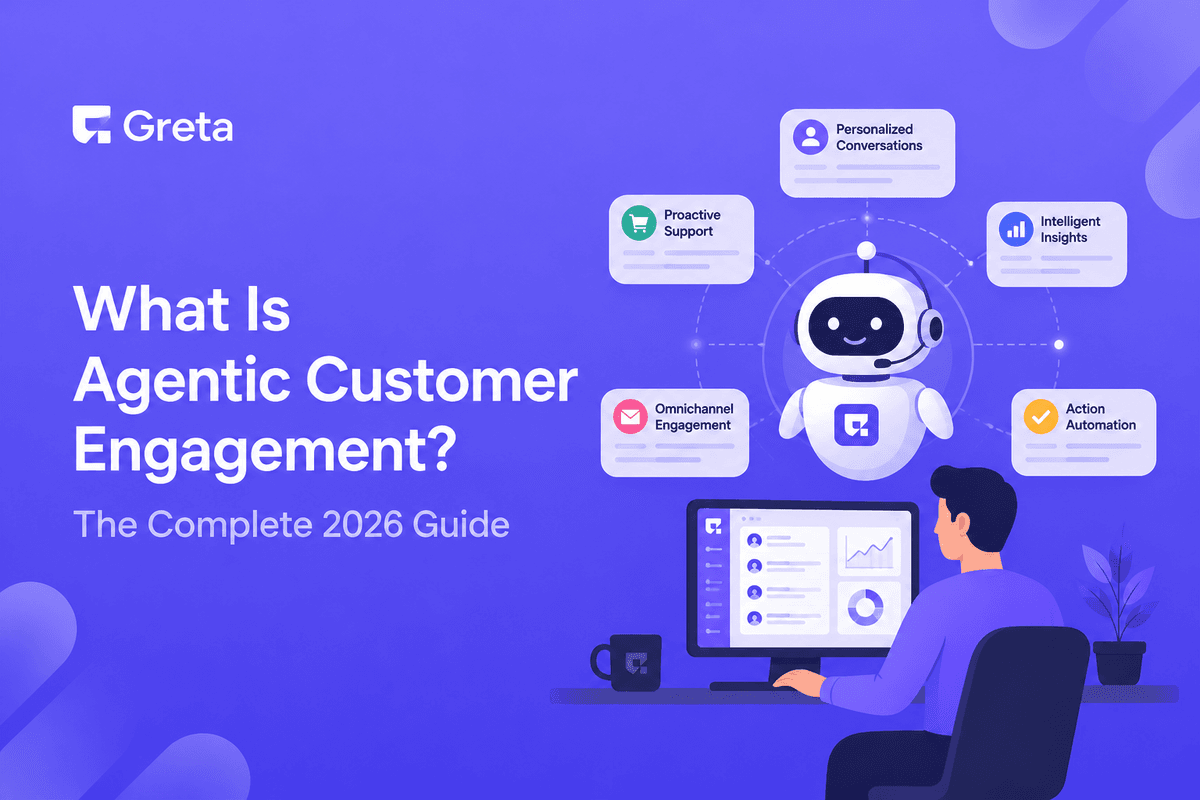
Agentic customer engagement uses AI agents to autonomously analyze customer behavior, decide on actions, personalize messaging, and act across the journey — instead of marketers manually building every campaign. It shifts engagement from human-configured rules to goal-directed AI, scaling personalization beyond manual capacity.
Marketing automation has always promised to do the work for you — but in practice, someone still had to build every rule, segment, and journey. Agentic customer engagement is the step change: AI agents that actually decide and act on their own. This complete guide explains what agentic customer engagement is, how it differs from traditional automation, how it works, and what it means for teams in 2026.
Got an idea? Build it now!
Just start with a simple Prompt
Get Started Today


What Is Agentic Customer Engagement?
Agentic customer engagement is an approach where AI agents autonomously analyze customer behavior, decide what action to take, personalize the message, and execute it — working toward goals you set rather than following pre-built journeys step by step.
The key word is agentic: the AI acts with autonomy and intent, not just triggered rules. It's the difference between a tool that waits for instructions and one that pursues an objective.
How Is It Different from Traditional Automation?
Traditional automation executes rules a human defined: if X, send Y. Agentic engagement decides what to do based on goals and context, adapting in real time without a human specifying every branch. The table makes the contrast concrete.
| Aspect | Traditional Automation | Agentic Engagement |
|---|---|---|
| Logic | Human-defined rules | Goal-directed AI |
| Decisions | Pre-set branches | Agent decides in context |
| Personalization | Segments + rules | Adaptive per customer |
| Adaptation | Manual updates | Real-time, autonomous |
| Human role | Build every journey | Set goals + guardrails |
| Scale | Limited by team | Scales with agents |
Got an idea? Build it now!
Just start with a simple Prompt
Get Started Today
How Does Agentic Engagement Work?
- Agents observe customer behavior and context continuously.
- They decide the best action toward the goals you've set.
- They personalize the message and channel per customer.
- They execute autonomously, then learn from the outcome.
- They operate within guardrails and access controls you define.
What Does It Mean for Marketing Teams?
Agentic engagement shifts the human role from building every journey to setting goals, guardrails, and strategy while agents handle execution. It scales personalization far beyond manual capacity, freeing teams for higher-level work.
This mirrors the broader move toward autonomous AI features in software, the same pattern as adding AI agents inside your app. It's also how lean teams run sophisticated operations, as seen across 15 real businesses running on AI-built apps.
What Should You Watch Out For?
- Set clear goals and guardrails — autonomy needs boundaries.
- Ensure data quality; agents act on the signals they're given.
- Apply access controls to the customer data agents use.
- Monitor agent actions and outcomes, don't set and forget.
- Keep humans in the loop for sensitive decisions.
Frequently Asked Questions
What is agentic customer engagement?
It's using AI agents to autonomously analyze behavior, decide actions, personalize, and act across the customer journey toward goals you set.
How is it different from marketing automation?
Automation runs human-defined rules; agentic engagement makes context-aware decisions toward goals and adapts in real time.
Does it replace marketers?
No. It shifts their role from building every journey to setting goals, guardrails, and strategy while agents execute.
What does it need to work well?
Clear goals and guardrails, good data quality, access controls, and ongoing monitoring of agent actions and outcomes.
Is agentic engagement new?
It's an emerging 2026 approach building on AI agents. Results depend on data, strategy, and how well guardrails are set.
Key Takeaways
- Agentic engagement uses AI agents that decide and act autonomously.
- It differs from automation by being goal-directed, not rule-bound.
- The human role shifts to goals, guardrails, and strategy.
- Agentic customer engagement scales personalization beyond manual capacity.
Curious what agentic engagement could do for your customers? Explore Questera and see AI agents work toward your goals.
Got an idea? Build it now!
Just start with a simple Prompt
Get Started Today
Ready to be a
10x Marketer?
See it in action