






Prompt-to-App vs Plan-to-Product: AI Workflows Compared
TL;DR
- Prompt-based app development is fast but often limited to demos and experiments
- AI-driven product development focuses on planning, structure, and scalability
- Workflow choice matters more than the AI tool itself
- Prompt-first approaches struggle as products grow in complexity
- Plan-to-product workflows help teams ship maintainable software
- Sustainable AI for building software combines speed with direction
Introduction
AI has changed how software gets built. What once took months can now take days, sometimes hours. But as more teams start using AI for building software, a clear split has emerged in how they use it. On one side, there’s prompt-based app development, fast, exciting, and instantly gratifying. On the other hand, there’s AI-driven product development, more deliberate, structured, and focused on long-term outcomes.
At first glance, both approaches seem similar. You’re using AI, after all. But in practice, they lead to very different results. One often ends with a flashy demo. The other ends with a real product that ships, scales, and survives contact with users.
In this article, we’ll break down these two AI development workflows, compare where each shines (and fails), and help you decide which approach makes sense for your team, especially if you’re a founder, product leader, or engineer using AI for building software in the real world.
What does Building Software with AI means?
Using AI to build software isn’t just about speed anymore. Early on, AI tools focused on code generation, which was helpful but narrow. Today, AI influences planning, architecture, iteration, and even product decisions.
This is why understanding your AI development workflow matters more than the tool itself. Two teams can utilize the same AI and achieve completely different outcomes based on how they apply it. One might rely entirely on prompt-based app development, while the other adopts a more holistic AI-driven product development approach.
The difference isn’t about intelligence. It’s about intent.
What Is Prompt-Based App Development?
Prompt-based app development is exactly what it sounds like: you describe what you want in natural language, and AI generates an app, or at least something that looks like one.
How Prompt-Based App Development Works
In a typical prompt-based app development flow, you write a prompt like, “Build me a task management app with user login and dashboards.” The AI responds with generated code, UI components, and sometimes even deployment steps.
This AI-powered app creation feels magical. It’s fast, visual, and accessible, even for non-technical users. For experimentation, it’s hard to beat.
Why Prompt-Based App Development Feels So Powerful
The appeal is obvious. You get instant feedback. You see results immediately. For AI for MVP building or idea validation, prompt-based workflows can feel like cheating, in a good way.
For founders exploring AI for startup development, this approach lowers the barrier to entry. You can test ideas without assembling a full engineering team.
Limitations of Prompt-Based App Development
But there’s a catch. What’s generated is often shallow. Architecture is implicit, not intentional. As complexity grows, cracks start to show.
Prompt-based app development struggles with maintainability, scalability, and iteration. Small changes can break large parts of the app. That’s because the workflow optimizes for output, not structure, something AI-driven product development explicitly addresses.
 Build this with a prompt on Greta.sh — describe the app, Greta writes and deploys it.
What Is AI-Driven Product Development?
If prompt-based workflows are about speed, AI-driven product development is about direction.
Instead of jumping straight to generation, this approach uses AI across the entire product lifecycle: planning, architecture, implementation, and iteration.
How AI-Driven Product Development Is Structured
In AI-driven product development, AI helps define requirements, map system architecture, and surface trade-offs before code is written. Code generation still happens, but it’s guided by a plan.
This creates a more resilient AI coding workflow, where AI supports thinking, not just typing.
Why AI-Driven Product Development Focuses on Outcomes
The goal isn’t to generate something that works once. It’s to build something that keeps working as requirements change.
For teams serious about AI for building software at scale, this approach prioritizes clarity, ownership, and evolution. You’re building a product, not a prototype.
AI for Building Software: Comparing the Two Workflows
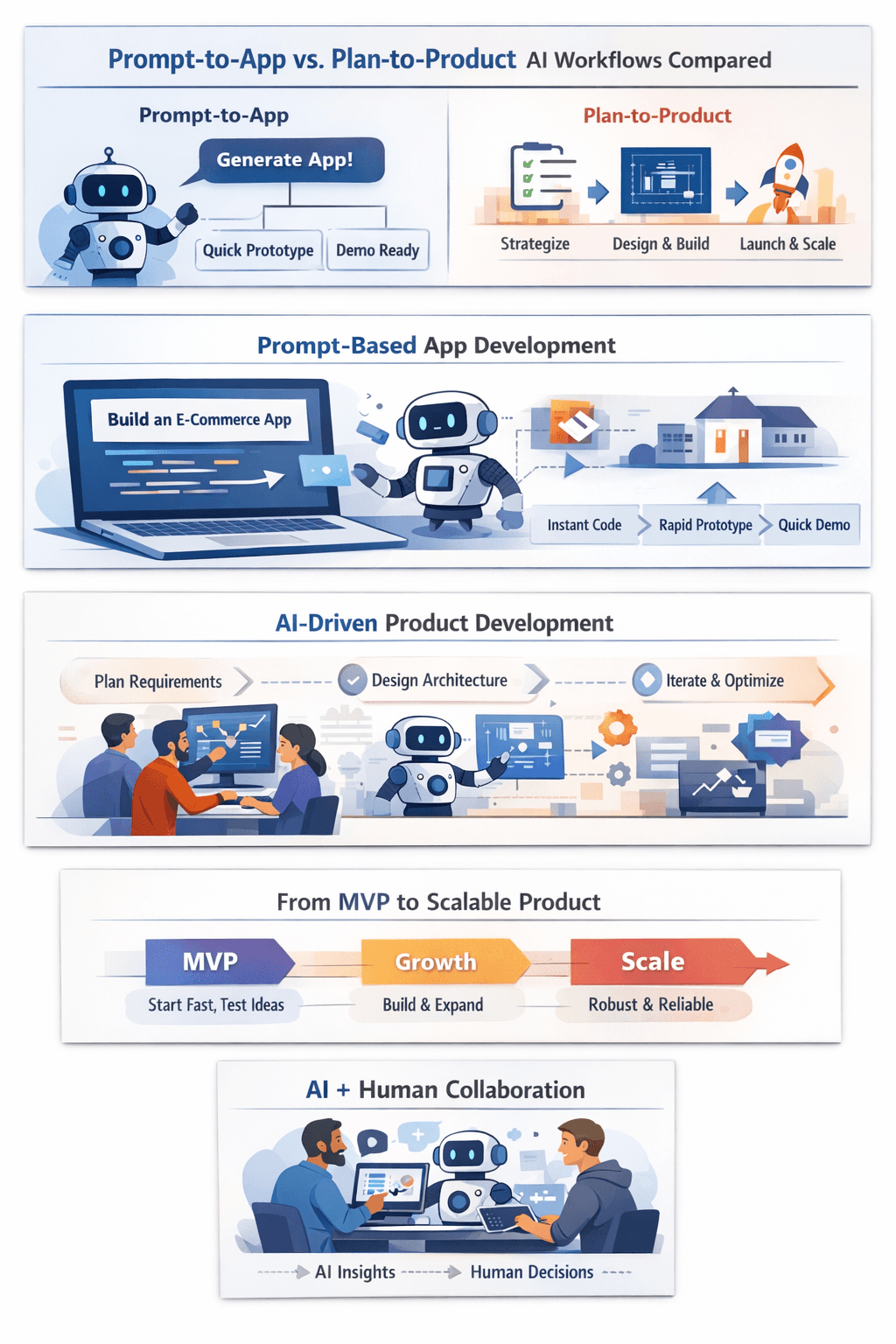
Prompt-Based App Development vs AI-Driven Product Development
Prompt-based app development is reactive. You ask, AI answers. It’s great for exploration but fragile under pressure.
AI-driven product development is proactive. You plan, AI assists, and humans decide. It’s slower upfront but faster over time.
Both are valid AI development workflows, but they serve very different purposes.
Where Each AI for Building Software Approach Works Best
- Prompt-based app development works best for:
- Demos
- Experiments
- One-off tools
- AI-driven product development works best for:
- MVPs are meant to reach production
- SaaS platforms
- Long-term internal systems
When Prompt-Based App Development Makes Sense?
Despite its limits, prompt-based app development isn’t “bad.” It’s just often misused.
Ideal Use Cases for Prompt-Based App Development
This approach shines when speed matters more than structure. Early ideation, hackathons, and internal prototypes benefit greatly from AI-powered app creation.
For founders validating ideas, prompt-based workflows can save weeks.
Risks of Over-Relying on Prompt-Based App Development
The problem arises when teams treat generated apps as production-ready. Without intentional architecture, technical debt accumulates fast.
 Want to try one of these? Start on Greta.sh — no setup, no boilerplate — just a prompt.
Why AI-Driven Product Development Wins Long Term?
As products mature, complexity increases. More users. More features. More constraints.
Use Cases for AI-Driven Product Development
If you’re building a SaaS, marketplace, or platform, AI-driven product development provides the foundation you need. It supports iteration without collapse.
This approach aligns well with serious AI for building software initiatives.
Why AI-Driven Product Development Scales Better
Because decisions are explicit. Architecture is intentional. AI assists with reasoning, not just execution.
Over time, this leads to fewer rewrites, better collaboration, and healthier systems, key benefits for AI for startup development teams.
How AI for Building Software Changes Team Dynamics
AI doesn’t just change how code is written. It changes how teams work.
Impact on Founders and Product Leaders
With AI-driven product development, founders gain visibility into technical decisions earlier. This improves alignment between business goals and implementation.
It also makes AI for MVP building more predictable, reducing unpleasant surprises later.
Impact on Engineering Teams
Engineers benefit from clearer context and fewer last-minute changes. AI supports planning and reduces repetitive work, leading to a more sustainable AI coding workflow.
How to Move From Prompt-Based App Development to AI-Driven Product Development?
Most teams don’t need to choose one forever. Many start with prompts and mature into plans.
Steps to Evolve Your AI Development Workflow
- Start by adding structure:
- Define requirements
- Use AI to explore architecture
- Review decisions before generating code
| Dimension | Prompt-Based App Development | AI-Driven Product Development (Plan-to-Product) |
|---|---|---|
| Primary Goal | Rapid generation of apps from prompts | Building scalable, production-ready products |
| Speed | Very fast initial output | Slower upfront, faster over the product lifecycle |
| Planning & Architecture | Minimal or implicit | Explicit planning and intentional architecture |
| Typical Output | Demos, prototypes, experiments | MVPs, SaaS products, internal platforms |
| Scalability | Limited; often breaks as complexity grows | Designed to scale with users and features |
| Maintainability | Requires heavy rework over time | Easier to maintain and evolve |
| Iteration Support | Fragile; small changes can break large parts | Built for continuous iteration and refinement |
| Technical Debt Risk | High | Lower due to structured decisions |
| Best Use Cases | Idea validation, hackathons, quick proofs | Long-term products, startups, growing teams |
| Team Collaboration | Often solo or ad-hoc | Supports structured team workflows |
| AI’s Role | Code generator | Decision-support partner across the lifecycle |
| Long-Term Viability | Low for production systems | High for real-world software delivery |
Choosing the Right AI Workflow for Building Software
There’s no universal answer, only context.
Ask yourself:
- Is this a demo or a product?
- Will this need to scale?
- Who maintains it long term?
Your answers should guide how you use AI for building software, not the other way around.
Conclusion
AI has made it easy to generate software quickly, but speed alone doesn’t guarantee a product that lasts. While prompt-based app development is useful for rapid experimentation, it often falls short when products need to scale, evolve, and support real users.
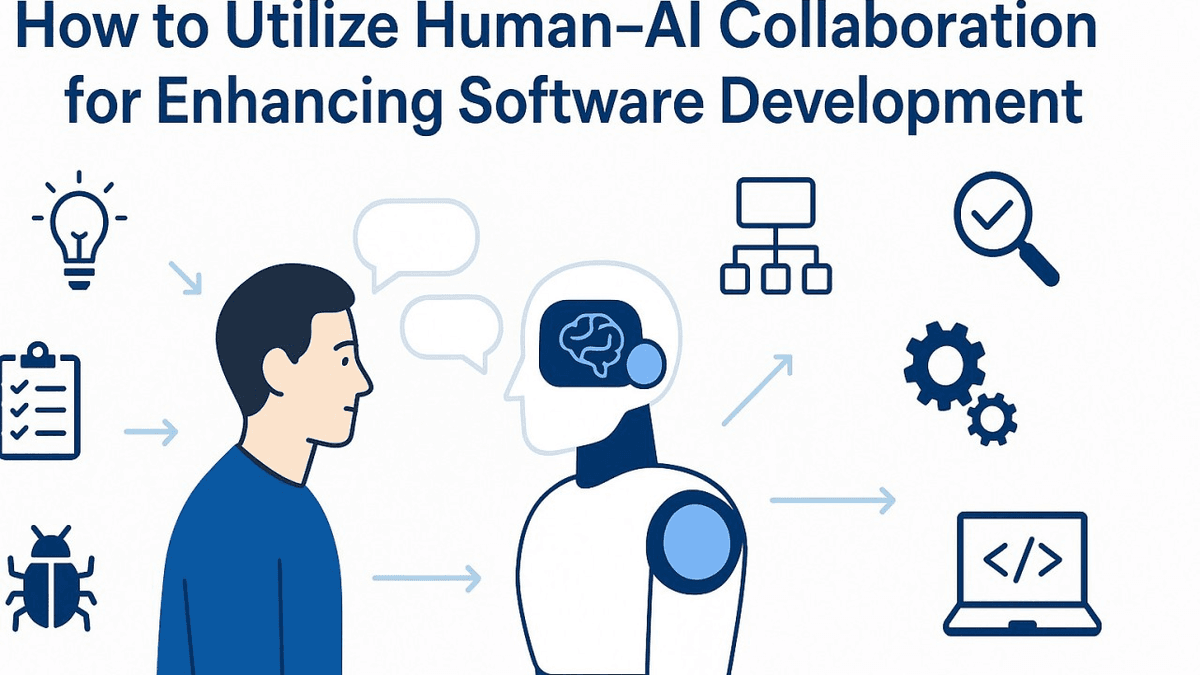
This is where AI-driven product development stands apart. By combining planning, architecture, and execution, it turns AI into a strategic partner rather than a simple code generator. For teams serious about AI for building software, this approach creates clarity, reduces rework, and supports long-term growth.
Successful founders and CTOs use AI intentionally, accelerating decisions without giving up control. Platforms like Greta reflect this shift, helping teams move from early ideas to structured, production-ready products with confidence. In the long run, the advantage isn’t how fast you build, it’s how well what you build holds up.
FAQs
1. Is prompt-based app development suitable for production apps?
Usually not on its own. It’s best for prototypes, not long-term systems.
2. What makes AI-driven product development different?
It uses AI across planning, architecture, and iteration—not just code generation.
3. Can startups combine both approaches?
Yes. Many teams start with prompts and evolve into structured AI workflows.
4. Is AI-driven product development slower?
It may feel slower initially, but it’s faster over the product’s lifetime.
5. Which approach is better for AI for MVP building?
If the MVP is meant to scale, AI-driven product development is the safer choice.