






7 Questions Founders Ask Before Trusting AI Architecture
TL;DR
- AI can guide architecture decisions, but founders must retain control
- AI-driven development works best as decision support, not automation
- Strong AI architecture design considers scale, security, and evolution
- AI helps founders surface trade-offs and reduce blind spots
- Responsible AI use leads to faster, more confident system design
Introduction:
AI is no longer just an efficiency layer for writing code. It is increasingly shaping how products are designed, how systems evolve, and how decisions are made across the software lifecycle. For startup founders, this shift creates a pivotal moment: ignoring AI in architecture decisions now carries as much risk as adopting it without guardrails.
This is where AI for startup founders becomes a strategic advantage. When used correctly, AI helps founders think more clearly about system design, scalability, and long-term trade-offs. Modern AI-driven development is not about replacing human judgment; it is about augmenting it with better context, faster analysis, and data-backed insights.
Platforms like Questera reflect this evolution by applying AI not just to code, but to product and architectural decision-making itself. Before trusting AI with architecture, however, founders need to ask the right questions. The answers determine whether AI becomes a force multiplier or a liability.
What Does Trusting AI Architecture Actually Mean?
For many founders, adopting AI in system design can feel like a leap of faith. But in practice, trusting AI is not about giving up control; it’s about using AI intelligently to support better decisions. For AI for startup founders, understanding this distinction is critical before applying AI to core systems.
- It does not mean handing over control to AI Trusting AI does not remove founder or team accountability. In AI architecture design, humans still own outcomes, risks, and long-term system health.
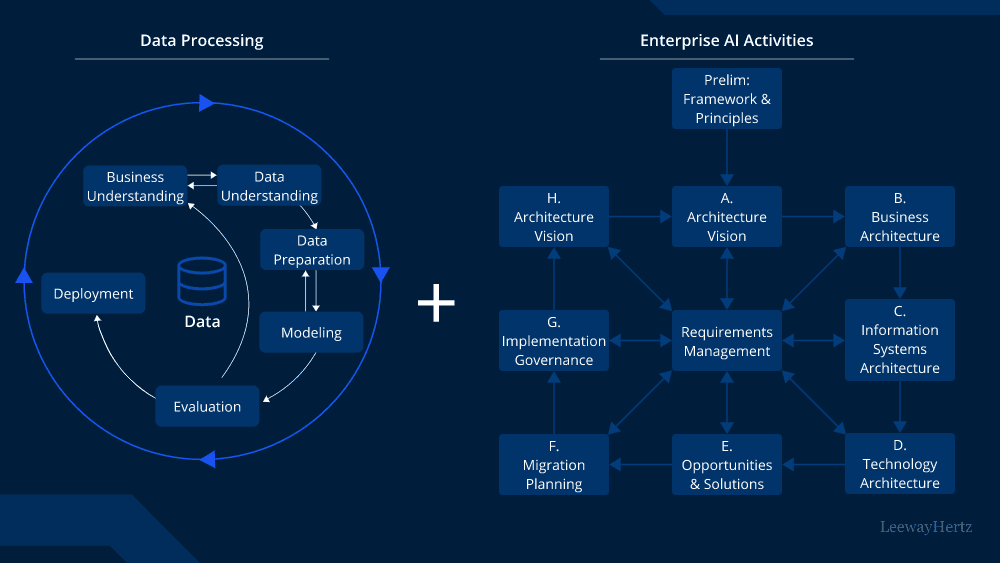
- It means using AI as a decision-support layer In modern AI-driven development, AI helps founders explore architectural options, surface risks, and analyze trade-offs faster and more clearly.
- AI participates in architectural thinking, not just execution Instead of only generating code, AI contributes to system-level reasoning, which is essential for AI for startup founders making early architectural decisions.
- Human judgment remains the final authority AI recommendations must always be reviewed, validated, and contextualized by founders or engineers to ensure responsible AI architecture design.
- This balance enables scalable, responsible adoption of AI When AI-driven development augments human insight rather than replacing it, founders gain speed and clarity without sacrificing control or scalability.
Question 1: Does the AI Understand the Business Context Behind the Architecture?
Architecture is not just technical; it is deeply tied to business goals. A system designed for rapid experimentation looks very different from one designed for enterprise reliability.
Founders should ask whether the AI takes business context into account. Does it understand user growth expectations, pricing models, or operational constraints? Strong AI for startup founders' solutions incorporates product signals and strategic intent, not just generic design patterns.
Tools that embed AI into product intelligence, rather than isolated generation, enable more grounded AI architecture design decisions.
Question 2: Can the AI Design Beyond the MVP Stage?
Many startups adopt AI during AI for MVP development, but architecture decisions made at this stage often persist far longer than intended.
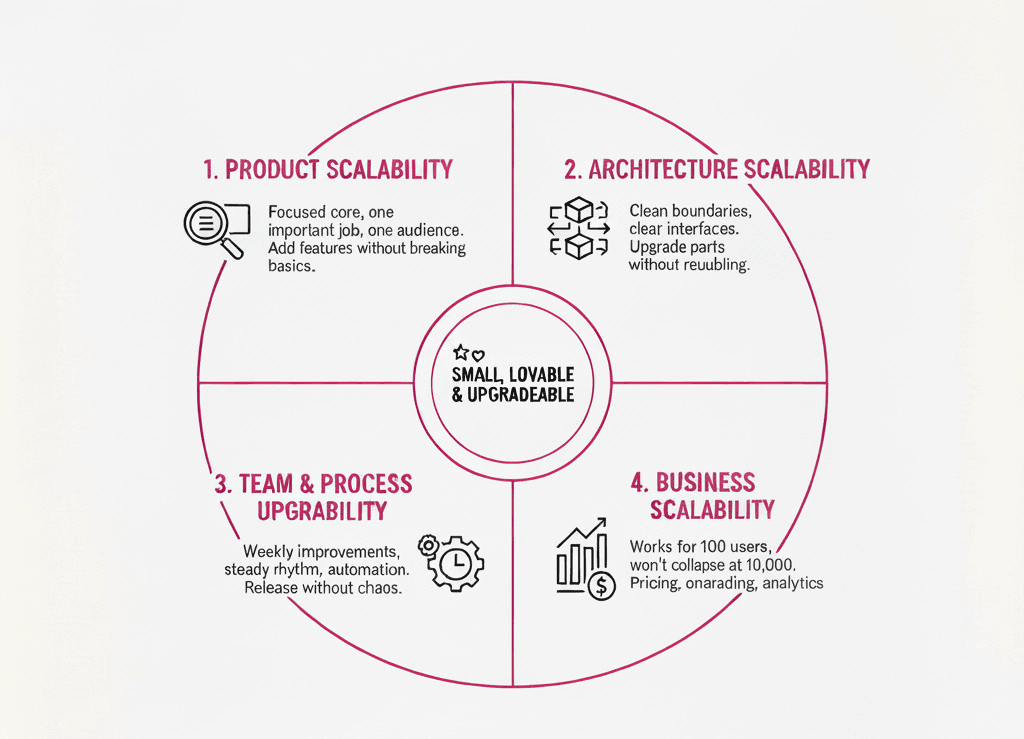
A critical question is whether the AI considers scale from the beginning. Can it anticipate data growth, feature expansion, and operational complexity? Sustainable AI-driven development supports evolution without forcing painful rewrites.
For founders building AI for scalable apps, early architectural foresight is not optional; it is survival.
Question 3: Does the AI Make Trade-Offs Explicit?
Every architecture decision involves trade-offs: speed versus flexibility, cost versus performance, simplicity versus extensibility.
Founders should avoid AI systems that present recommendations without explanation. High-quality AI architecture design makes trade-offs visible and understandable, allowing founders to make informed choices.
This is where AI shifts from automation to augmentation, supporting better judgment rather than replacing it.
Question 4: Will Human Teams Be Able to Maintain What the AI Designs?
Architecture lives with your team long after the initial build. If engineers struggle to understand or maintain AI-generated systems, velocity drops quickly.
Effective AI software engineering produces designs that humans can reason about. Founders should ask whether the AI supports clarity, documentation, and shared understanding.
Platforms like Questera, which focus on aligning AI insights with human workflows, help ensure architecture remains an asset, not a bottleneck.
Question 5: How Does the AI Address Risk, Security, and Compliance?
Security and compliance are architectural concerns, not afterthoughts. Founders remain accountable for data protection, access control, and regulatory exposure, even when AI is involved.
A serious AI development platform should account for security patterns and surface potential risks early. Responsible AI-driven development strengthens governance rather than bypassing it.
AI reduces uncertainty, not introduce hidden exposure.
Question 6: Can the Architecture Adapt as the Product Evolves?
Startups pivot. Customer needs change. Architecture must evolve without collapsing.
Founders should evaluate whether AI-generated designs support modularity and refactoring. Flexibility is a hallmark of good AI architecture design, especially for teams building long-term platforms.
In practice, AI for startup founders works best when it supports continuous learning, not rigid prescriptions.
Question 7: How Do Humans Stay in Control When AI Is Involved?
No AI system is infallible. The final question founders should ask is how oversight works.
Can recommendations be reviewed, challenged, and refined? Are there feedback loops that allow AI to improve with real-world input? Mature AI-driven development includes governance, validation, and human checkpoints.
This is where AI becomes trustworthy, not because it is perfect, but because it is accountable.
Why Founders Are Moving Toward AI-Assisted Decision Platforms
The most successful founders are not using AI just to move faster; they are using it to think better. Instead of relying on instinct alone, they leverage AI to analyze signals, evaluate trade-offs, and guide architectural direction.
This shift is why platforms like Questera focus on applying AI to decision intelligence across product and architecture. By embedding AI into how choices are made, not just how code is written, founders gain clarity without losing control.
Conclusion
AI is reshaping how architecture decisions are made, but responsibility still rests with founders and teams. The goal is not to replace architects or engineers, but to empower them with better insight.
When guided by the right questions, AI for startup founders becomes a strategic advantage. Thoughtful AI architecture design, supported by disciplined AI-driven development, allows teams to move faster while building systems that last.
AI is no longer optional. But trust in AI must be intentional, contextual, and earned.
FAQs
1. Should founders trust AI with core architecture decisions?
Yes, when AI is used as an advisor and decisions are reviewed by humans.
2. Is AI useful beyond MVP development?
Absolutely. The greatest value of AI-driven development appears during scaling and optimization.
3. Can AI help non-technical founders make architecture decisions?
Yes. AI can surface options and trade-offs, improving understanding and confidence.
4. Does using AI increase architectural risk?
Only if used without oversight. With governance, AI reduces blind spots.
5. How does Questera fit into AI architecture decision-making?
Questera applies AI to product and architectural intelligence, helping founders make clearer, data-backed decisions across the development lifecycle.
Ready to be a
10x Marketer?
See it in action





© 2026 Questera
Follow in Google