






How to Structure AI-Generated Code for a Real Project?

TL;DR
- Structured AI code generation relies on schemas, templates, and standards
- Clear structure makes AI-generated code readable and easier to maintain
- Organized AI code reduces technical debt and supports scalability
- Human review and refactoring are essential for production readiness
- Tools like Greta help enforce structure in real AI coding workflows
Introduction
AI has transitioned from a novelty to a strategic capability in software engineering. Today’s AI developer tools can generate entire modules, API endpoints, and frontend components with minimal prompts. But generating code and building maintainable, scalable software are not the same thing. Many teams find that AI-generated code, if left unstructured, can quickly lead to fragile systems, inconsistent patterns, and long-term technical debt.
This is where best practices for AI code become essential. When we talk about organizing AI-generated code, we’re talking about applying intentional design, conventions, and human oversight to ensure that AI output integrates cleanly with existing codebases and engineering standards. A strong AI coding workflow doesn’t simply amplify productivity , it preserves quality and predictability, even when AI assists heavily in code creation.
What Is Structured AI Code Generation?
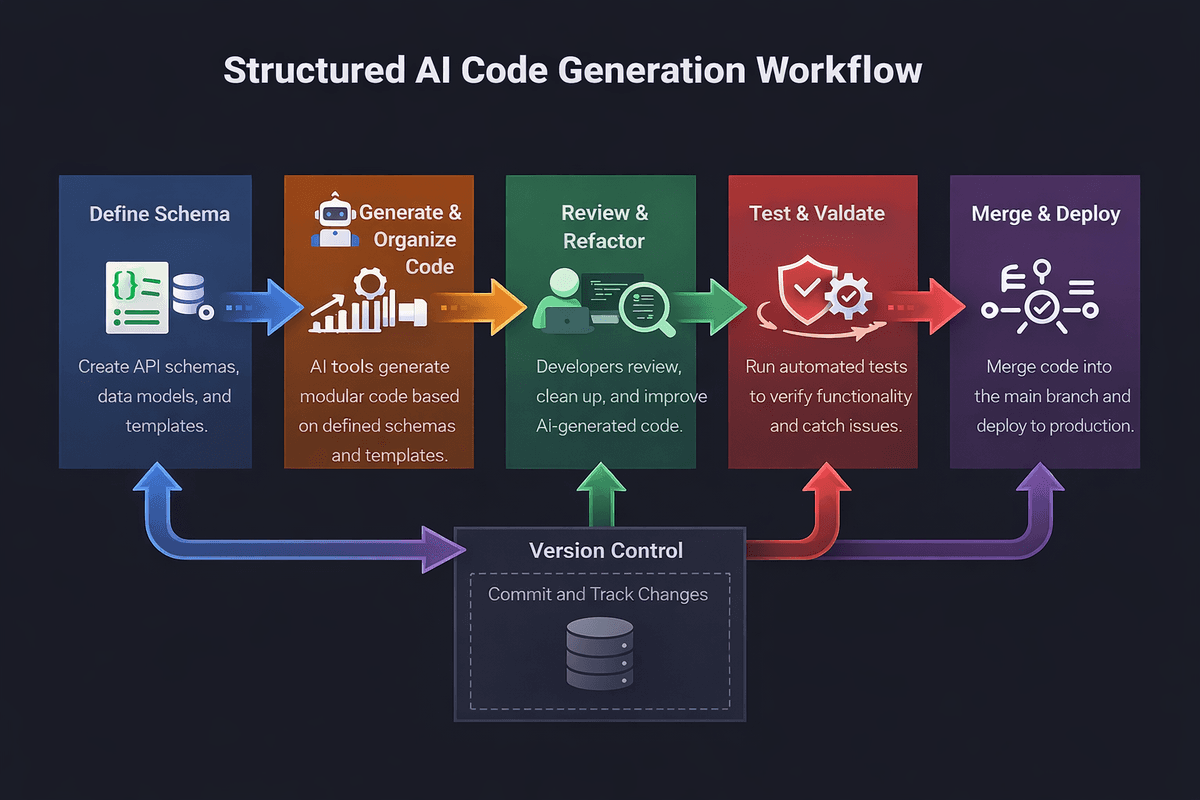
Simply put, structured AI code generation means guiding AI models with clear, predefined rules. These rules shape how the generated code is written, organized, and integrated into an existing system. Instead of producing random or inconsistent snippets, AI delivers predictable, repeatable output that aligns with real project standards.
At its core, structured AI code generation relies on:
- Defined schemas for APIs and data models
- Templates for files, folders, and project layout
- Standards for naming, formatting, and conventions
Without structure, AI may ignore existing patterns, repeat logic, or mix architectural styles. With structure in place, AI follows contracts and respects boundaries. This makes the generated code easier to review, safer to modify, and more reliable in production environments.
Schemas and templates act as guardrails, helping AI tools translate natural language instructions into functional, well-organized code.
Why Structure Is Critical in AI-Generated Code?
First, structure significantly improves readability. Developers can understand intent faster and spend less time interpreting unfamiliar logic. As a result, code reviews become quicker and more effective.
Second, debugging and maintenance are far easier. When code follows known patterns, tracing issues is straightforward. Refactoring also feels safer because responsibilities are clearly separated and modules are easier to isolate.
Over time, structured AI-generated code delivers additional benefits:
- Better scalability for growing codebases
- Lower long-term technical debt
- More consistent output across teams and contributors
In short, structured code doesn’t just work today,it continues to work well as the project evolves.
What are the different approaches to
Schema-Driven Code Generation
Build this with a prompt on Greta.sh — describe the app, Greta writes and deploys it.Defining Contracts Before Generating Code
One of the strongest foundations for structured generation is schemas. By defining APIs, data models, or contracts upfront, you give AI a clear target.
Schema-first approaches:
- Reduce ambiguity
- Improve consistency
- Encourage clean architecture for AI projects
This is a key part of best practices for AI code, especially when building systems meant to scale. With schemas in place, organizing AI-generated code becomes easier because every piece aligns with a known contract. It also strengthens your AI coding workflow by reducing guesswork.
Template-Based Project Scaffolding
Using Consistent Project Skeletons
Templates provide structure before code even exists. A predefined project skeleton ensures that every AI-generated module follows the same layout, naming conventions, and boundaries.
Templates are essential AI developer tools for consistency. They support scalable code architecture and make organizing AI-generated code far less chaotic. In a mature AI coding workflow, templates act as guardrails that keep AI output aligned with team standards.
Modular and Component-Based Generation
Breaking Large Systems Into Smaller Units
AI performs best when working on small, well-defined problems. Generating entire systems at once often leads to tangled logic and mixed responsibilities.
Modular generation:
- Improves readability
- Simplifies testing
- Makes refactoring AI-generated code safer
This is a core principle of best practices for AI code. By breaking work into components, organizing AI-generated code becomes manageable, and your AI coding workflow stays flexible instead of brittle.
Prompt Engineering for Structured Output
Designing Prompts That Enforce Structure
Prompts are not just instructions,they’re design tools. Well-crafted prompts include constraints like folder structure, naming conventions, and architectural rules.
Effective prompts:
- Reduce variance in output
- Align with clean architecture for AI projects
- Strengthen your AI coding workflow
This is one of the most overlooked best practices for AI code. Clear prompts are often the difference between clean results and messy rewrites when organizing AI-generated code.
Embedding AI Into the Development Workflow
Want to try one of these? Start on Greta.sh — no setup, no boilerplate — just a prompt.AI as Part of the Existing Engineering Process
AI should not operate outside your normal workflow. Generated code should follow the same process as human-written code: branches, pull requests, reviews, and CI checks.
Embedding AI this way:
- Normalizes AI code review
- Maintains engineering discipline
- Keeps production-ready AI code standards high
A healthy AI coding workflow treats AI as a contributor,not an exception.
Enforcing Coding Standards and Conventions
Automating Consistency Across AI and Human Code
AI does not inherently follow style guides. Automated tools,linters, formatters, static analyzers,are essential for enforcing consistency.
These tools:
- Support scalable code architecture
- Reduce review friction
- Improve long-term maintainability
They’re foundational AI developer tools for teams serious about best practices for AI code and effective organizing AI-generated code within a robust AI coding workflow.
Common Pitfalls in AI Code Generation
Mistakes Teams Make Without Structure
Common issues include:
- Generating too much at once
- Skipping reviews
- Ignoring architecture
These mistakes undermine best practices for AI code and make organizing AI-generated code painful. A disciplined AI coding workflow prevents these problems before they escalate.
Greta and Structured AI Code Generation
Greta transforms clear natural language instructions into structured, production-ready applications. Rather than generating isolated snippets, Greta focuses on building systems that follow defined architecture and workflow patterns.
The output includes a complete application stack,frontend, backend, and supporting infrastructure,designed to fit real development environments.
Key capabilities include:
- Prompt-driven application generation with architectural context
- Structured frontend and backend code aligned to project standards
- Built-in workflows that support iteration and refinement
- Exportable source code ready for version control and CI/CD
By emphasizing structure over raw generation, Greta helps teams apply best practices for AI code, maintain consistency, and integrate AI output seamlessly into real projects. This makes Greta especially well-suited for teams looking to move from experimentation to reliable, production-ready development.
Ready to ship? Open Greta.sh — your idea → a working app, in one chat.Conclusion
AI can generate code at remarkable speed, but structure is what makes that code last. By applying best practices for AI code, deliberately organizing AI-generated code, and maintaining a disciplined AI coding workflow, teams can transform AI output into software that scales confidently.
The real advantage of AI isn’t just faster code, it’s faster good code. Structure is the difference.
FAQs
1. What are best practices for AI code in real projects?
Define architecture first, generate modularly, review often, and refactor early.
2. Why is organizing AI-generated code important?
Because unstructured AI output becomes difficult to maintain and risky to change.
3. Can AI-generated code be production-ready?
Yes, when paired with testing, review, and clean architecture.
4. How does an AI coding workflow differ from traditional workflows?
It adds structure around generation, validation, and refactoring.
5. Do AI developer tools replace developers?
No. They accelerate development but still require human judgment.
6. How often should AI-generated code be refactored?
Immediately after generation, before complexity builds up.
7. What role does AI code review play?
It ensures quality, security, and architectural consistency.
8. Is clean architecture important for AI projects?
Yes. It prevents long-term technical debt and improves scalability.
9. How do schemas help AI-generated code?
They provide contracts that guide consistent and predictable output.
10. What’s the biggest mistake teams make with AI code?
Treating AI output as final instead of a starting point.