






Beyond Vibe Coding: From Prompting to Autonomous AI Agents
TL;DR
- Vibe coding introduced prompt-based coding and made AI programming accessible
- Vibe coding alone struggles with scale, planning, and long-term software maintenance
- Beyond vibe coding focuses on outcomes instead of individual prompts
- Autonomous AI agents can plan, execute, and iterate on tasks independently
- AI-driven development shifts control from manual prompting to goal-based workflows
- AI agent workflows combine planning, tool use, execution, and evaluation
- AI-first development treats AI as a core system, not a helper
- AI automation for developers removes repetitive engineering work
- Humans remain essential for oversight, constraints, and architectural decisions
- The future of software is hybrid: humans define intent, autonomous AI agents execute
Indroduction
If you’ve spent any time building with modern AI tools, you’ve probably felt it, that rush of typing a loose prompt and watching code magically appear. That feeling has a name: vibe coding. And for a while, it felt like the future.
But here’s the thing: vibe coding is just the beginning.
We’re now entering a phase beyond vibe coding, where prompting alone isn’t enough. The real shift is happening in AI-driven development, where systems don’t just respond, they act. This is where autonomous AI agents come in, and where software development starts to look fundamentally different.
In this article, we’ll break down what lies beyond vibe coding, why autonomous AI agents matter, and how AI-driven development is reshaping how developers actually build, ship, and scale software.
Why Vibe Coding Was the First Big Leap?
Vibe coding worked because it felt human. Instead of wrestling with syntax, you could explain what you wanted and let AI programming tools handle the details. This style of prompt-based coding made software creation feel conversational and creative.
For many developers, vibe coding was their first real exposure to AI-powered software development. You could build prototypes in minutes, test ideas quickly, and feel productive almost instantly. In the early days of AI-driven development, that was revolutionary.
But vibe coding is reactive by nature. You prompt, the AI responds, and you correct it. That loop works well for small tasks, but it struggles when systems get complex. That’s where the journey beyond vibe coding begins.
Where Vibe Coding Starts to Fall Apart?
The problem with vibe coding isn’t quality, it’s scope. As projects grow, prompt-based coding becomes fragile. You have to remember context, manage dependencies, and manually orchestrate every step.
This is where AI-driven development starts demanding more structure. Real software needs planning, testing, deployment, and iteration. Vibe coding alone can’t manage that complexity reliably.
Moving beyond vibe coding means acknowledging that prompts are not plans. And that’s exactly why autonomous AI agents are becoming so important.
The Shift Toward AI-Driven Development
True AI-driven development isn’t about asking for snippets of code. It’s about defining goals and letting systems work toward them. Instead of micromanaging outputs, developers start managing outcomes.
This is the moment when AI-first development becomes real. Prompts evolve from commands into context. The AI no longer waits for every instruction; it begins to reason, plan, and act.
Once you experience this shift, it’s hard to go back. You realize you’re no longer just vibe coding, you’re operating beyond vibe coding.
What Autonomous AI Agents Actually Are?
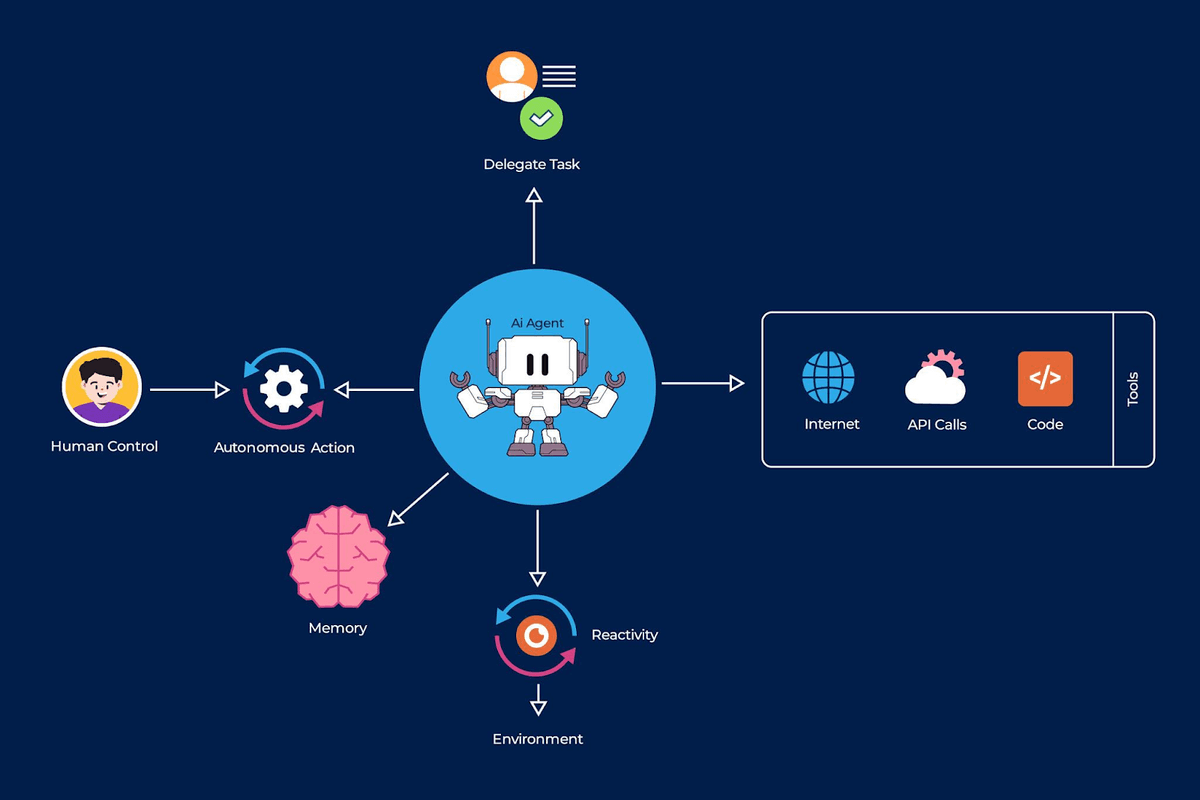
Let’s break it down simply. Autonomous AI agents are AI systems designed to take a goal and work toward it independently. They don’t just generate responses; they execute workflows.
An autonomous AI agent can:
- Interpret objectives
- Break work into steps
- Use tools like codebases and APIs
- Evaluate results
- Iterate until the goal is met
This is a massive upgrade from traditional AI programming. Instead of one-off responses, autonomous AI agents run full AI agent workflows. That’s why they sit at the heart of modern AI-driven development.
How an AI Agent Workflow Works?
To really move beyond vibe coding, you need to understand the AI agent workflow. While implementations vary, the core structure is consistent.
Build this with a prompt on Greta.sh — describe the app, Greta writes and deploys it.Clear Goals First
Everything starts with clarity. In AI-driven development, vague goals lead to poor outcomes. Autonomous AI agents need a defined target to succeed.
Planning Before Action
Unlike prompt-based coding, agents plan first. They decide what steps are required, in what order, and with which tools. This planning layer is what separates autonomous AI agents from simple AI programming tools.
Execution and Tool Use
This is where AI-powered software development becomes tangible. Agents modify files, run tests, call APIs, and deploy changes. They don’t imagine code; they work with real systems.
Evaluation and Iteration
After acting, agents check their results. If something fails, they adapt. This loop is the backbone of AI automation for developers and a key reason agents outperform vibe coding.
Why AI-First Development Favors Autonomous Agents?
In AI-first development, AI isn’t an add-on; it’s foundational. Autonomous AI agents fit perfectly because they reduce human bottlenecks.
Instead of developers handling every repetitive task, AI automation for developers takes over:
- Running tests
- Refactoring code
- Updating documentation
- Monitoring systems
This doesn’t remove humans from the process. It elevates them. Developers focus on architecture and decisions while agents handle execution. That’s the real promise of AI-driven development beyond vibe coding.
The Developer’s Role Beyond Vibe Coding
As we move beyond vibe coding, the developer’s role changes. You’re no longer just writing code or crafting clever prompts. You’re designing systems that use AI effectively.
This includes:
- Defining constraints for autonomous AI agents
- Designing robust AI agent workflows
- Reviewing and guiding outcomes
In this new world of AI-driven development, developers become supervisors and architects. You still need deep technical knowledge, but you apply it at a higher level.
Want to try one of these? Start on Greta.sh — no setup, no boilerplate — just a prompt.AI Automation for Developers in the Real World
The benefits of AI automation for developers are already visible. Autonomous AI agents are being used to:
- Maintain legacy codebases
- Detect and fix bugs
- Automate CI/CD pipelines
- Handle infrastructure updates
This is AI-powered software development at scale. Instead of replacing developers, it removes the grind and lets teams move faster with fewer errors.
Once you see this in action, vibe coding alone feels limiting. You realize how much more powerful AI-driven development becomes with agents in place.
Risks and Guardrails With Autonomous AI Agents
Of course, autonomy comes with responsibility. Autonomous AI agents are powerful, but they’re not magic.
Without guardrails, agents can:
- Loop endlessly
- Make costly mistakes
- Modify sensitive systems
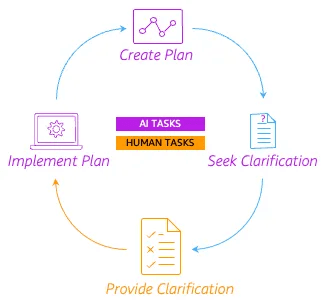
That’s why moving beyond vibe coding doesn’t mean abandoning control. It means designing safe boundaries. Human oversight remains essential in AI-first development.
The best systems combine autonomy with accountability. That balance is what makes AI-driven development sustainable.
How to Transition Beyond Vibe Coding?
If you’re currently vibe coding and wondering how to level up, the transition doesn’t have to be abrupt.
Start by:
- Using prompt-based coding for exploration
- Defining clear goals instead of step-by-step instructions
- Introducing small AI agent workflows
- Adding constraints and review loops
Over time, you’ll find yourself relying more on autonomous AI agents and less on manual prompting. That’s when you’ll know you’ve truly moved beyond vibe coding.
Greta
If you’re serious about moving beyond vibe coding and actually putting autonomous AI agents to work, Greta is worth paying attention to. Greta is built for AI-driven development, not just prompt-based coding. It helps you think in workflows, outcomes, and execution instead of isolated snippets. Whether you’re experimenting with AI-first development, building real AI agent workflows, or scaling AI-powered software development, Greta feels less like a chatbot and more like a reliable engineering partner. It’s a solid choice for developers who want practical AI automation for developers, not just flashy demos.
The Future of AI-Driven Development
The future isn’t prompt-only. It’s hybrid. Humans define intent. Autonomous AI agents execute. Together, they form a powerful loop.
As AI-driven development matures, teams that embrace AI-first development will outpace those that don’t. The shift beyond vibe coding isn’t optional; it’s inevitable.
Those who adapt early will gain leverage, speed, and clarity in how software gets built.
Conclusion
Vibe coding opened the door to a new way of building software, but it was never the final destination. Moving beyond vibe coding means embracing autonomous AI agents and the full potential of AI-driven development.
This shift isn’t about replacing developers. It’s about amplifying them. With the right AI agent workflows, constraints, and oversight, developers can focus on what matters most while AI handles the rest.
The future of software belongs to those who think beyond prompts and design systems. And that future is already here.
FAQ
Ready to ship? Open Greta.sh — your idea → a working app, in one chat.1. How is Beyond Vibe coding different from traditional AI-assisted coding?
Beyond vibe coding focuses on outcomes and workflows, while traditional AI-assisted coding mainly generates code in response to prompts.
2. Can autonomous AI agents work on large, real-world codebases?
Yes, autonomous AI agents are designed to operate across complex repositories when given proper constraints and access controls.
3. What makes AI-driven development more scalable than prompt-based coding?
AI-driven development scales better because agents can plan, execute, and iterate without constant human intervention.
4. Do autonomous AI agents need constant monitoring?
They need oversight, but not micromanagement—well-designed guardrails reduce the need for continuous supervision.
5. Is AI-first development suitable for solo developers?
Absolutely. AI-first development can significantly increase leverage for solo developers by automating repetitive tasks.
6. How does AI automation for developers reduce burnout?
By handling testing, refactoring, and maintenance, AI automation lets developers focus on creative and strategic work.
7. Are autonomous AI agents limited to coding tasks only?
No, they can manage documentation, DevOps workflows, monitoring, and even product-level analysis.
8. What skills should developers learn to work effectively with AI agents?
System design, goal definition, and understanding AI agent workflows are more important than prompt tricks.
9. Can prompt-based coding coexist with autonomous AI agents?
Yes, prompt-based coding often serves as the entry point before transitioning to agent-driven workflows.
10. What’s the biggest mistake teams make when adopting AI-driven development?
Relying on AI without defining clear goals, constraints, and accountability structures.