






Top 7 Replit Alternatives for Vibe Coding
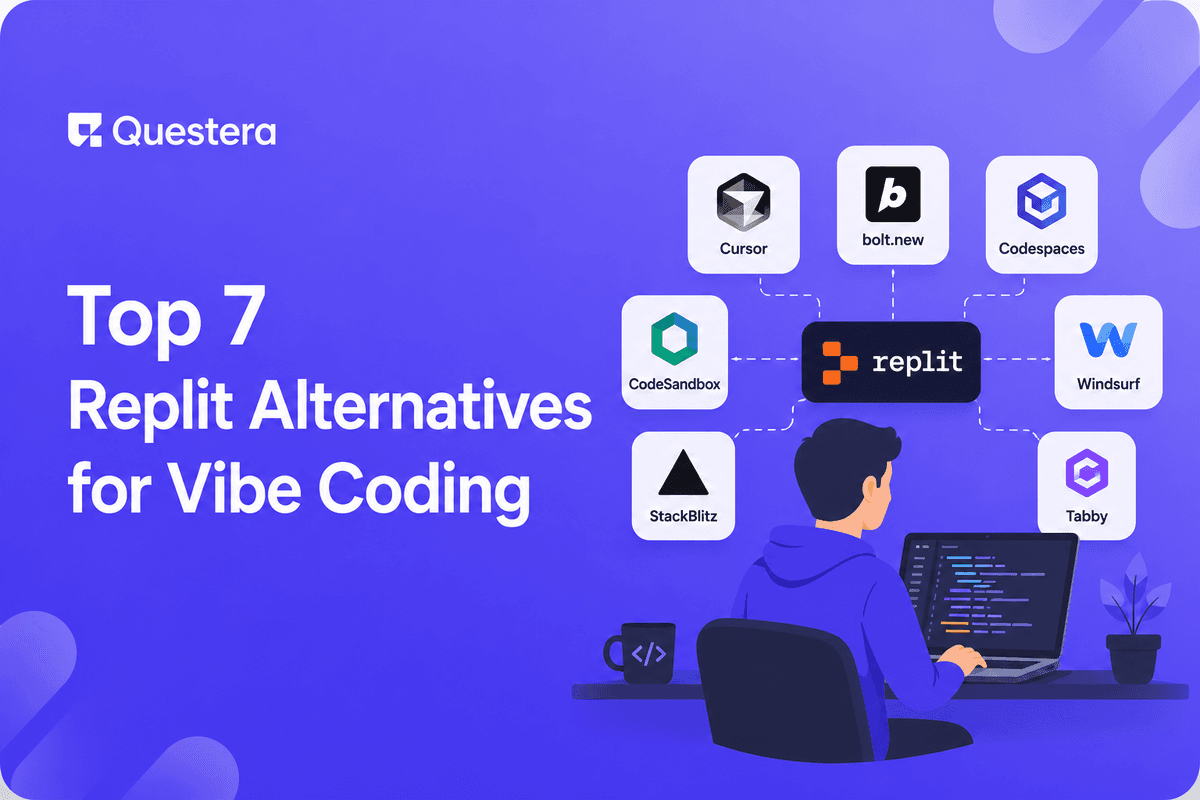
Replit Agent helped popularize AI-driven app building, but it's no longer the only option — and for many use cases, no longer the best one. The 2026 landscape has matured into distinct categories: prompt-native AI app builders (Greta, Lovable, Bolt.new, Rocket.new), AI IDEs (Cursor, Windsurf), generative component tools (v0 by Vercel), and traditional no-code with AI bolted on (Bubble). This guide compares the top 7 Replit alternatives honestly — what each one optimizes for, where each one wins, and which one fits your specific project.
Introduction
Replit is a strong tool. The Replit Agent helped popularize AI-driven app building, the in-browser IDE is well-known, and the platform handles deployment and hosting. But the 2026 vibe coding landscape has matured into distinct categories, and depending on what you're building, several alternatives produce better results faster. This guide compares the top 7 Replit alternatives honestly — what each one optimizes for and where each one genuinely wins.
Why People Are Looking for Replit Alternatives
- Iteration discipline — Replit Agent works well for first-pass builds but credit-based pricing penalizes heavy iteration
- Polish ceiling — Output is functional but design polish often requires additional rework
- Workflow fit — Some builders want a unified workspace; some want IDE-level code visibility; Replit sits in the middle
- Pricing predictability — Agent credit consumption can be unpredictable on complex projects
- Specialized needs — Mobile-first, design-led, or integration-heavy projects often fit specialized tools better
- Marketing surface — Replit doesn't bundle marketing tooling (SEO, CMS, analytics); separate tools needed
Alternative 1: Greta
Greta is a prompt-native vibe coding platform with bundled growth tooling — domain, basic SEO, analytics, and content management share one subscription with the app builder. Greta's bet: solo founders shipping SaaS need the app plus the marketing surface in one place, not stitched together from five tools.
Best For
- Solo founders shipping consumer-facing SaaS
- Builders who value predictable subscription pricing over credit-based
- Projects where the marketing surface (blog, SEO, analytics) matters alongside the app
- Non-developers wanting the lowest learning curve for full applications
Pricing
Subscription with bundled capacity. Heavy iteration doesn't change the monthly bill. Free tier available.
Where It Falls Short
- Less pixel-level design control than dedicated visual builders
- Newer ecosystem; fewer third-party templates than mature platforms
- Bundled marketing surface is solid but doesn't match Webflow-grade design control
Alternative 2: Lovable
Lovable made its name with Visual Edits — clicking on any element in the preview to refine it directly. The bet: design polish and UI quality are the deciding factors for marketing sites and consumer apps.
Best For
- Designers and design-conscious founders who want the most polished output
- Marketing sites, landing pages, brand-led products
- Builders comfortable iterating on visuals through direct UI manipulation
- Projects where 'looks beautiful' is a competitive requirement
Where It Falls Short
- Backend coverage is real but less mature than purpose-built alternatives
- Credit-based iteration can become expensive on complex projects
- Less bundled marketing surface than Greta
Alternative 3: Bolt.new
Bolt.new ships full-stack apps with strong Figma import. The bet: design-led founders want the Figma-to-code workflow to actually work, not just produce a janky approximation.
Best For
- Designers with Figma files who want to skip the handoff to engineers
- Builders who already designed in Figma before deciding to ship
- Projects where the design is finalized and execution is the remaining work
Where It Falls Short
- Without a Figma file, the workflow advantage shrinks
- Backend complexity sometimes hits ceilings on advanced patterns
- Marketing surface separate; not bundled like Greta
Alternative 4: Cursor
Cursor is an AI-augmented IDE, not an AI app builder. Different category entirely. The bet: developers want AI assistance inside their existing workflow, with full code visibility and IDE features.
Best For
- Developers (or comfortable-with-code builders)
- Projects requiring full code visibility from day one
- Teams with existing engineering culture absorbing AI
- Long-term projects where IDE workflow is required
Where It Falls Short
- Steep learning curve for non-developers
- No bundled hosting, deployment, or marketing surface — you bring those separately
- Slower to get a first working v1 compared to prompt-native app builders
Alternative 5: v0 by Vercel
v0 generates UI components via prompts, with strong Next.js + Tailwind output. The bet: developers want individual high-quality components they can drop into their existing codebase.
Best For
- Developers building on Next.js/React who need specific components fast
- Adding to existing codebases rather than greenfield builds
- Teams comfortable with code-level integration
- Component-by-component iteration
Where It Falls Short
- Not designed for full apps end-to-end; component-focused
- Backend/data layer not the focus
- Less useful for non-developers without code integration skills
Alternative 6: Bubble
Bubble is the longstanding no-code visual builder that pre-dates the AI app builder wave. The bet: visual drag-and-drop with deep customization can build production SaaS without code.
Want to try one of these? Start on Greta.sh — no setup, no boilerplate — just a prompt.Best For
- Builders who prefer visual workflow over conversation-based prompts
- Complex multi-tenant SaaS with detailed workflow logic
- Marketplaces with intricate state machines and many user types
- Teams comfortable with the steeper learning curve in exchange for control
Where It Falls Short
- No source code export — permanent vendor lock-in
- Learning curve is moderate-to-steep despite 'no-code' marketing
- Performance plateaus on heavy apps
- Workload Unit pricing can spike 3–5× on traffic surges
- AI Copilot exists but limited compared to AI-native builders
Alternative 7: Rocket.new
Rocket.new ships production-ready full-stack apps with 25+ native integrations and a pre-build "Solve" research phase. The bet: most AI app builders ship pretty UIs with no real backend; Rocket.new ships everything connected from build one.
Best For
- Builders prioritizing automatic mobile-responsive output
- Projects with deep integration needs (Stripe + CRM + email + AI all wired)
- Founders who value pre-build market research as part of the spec phase
- Apps where mobile is the primary surface
Where It Falls Short
- Credit consumption can be unpredictable on heavy iteration
- Less mature ecosystem than longer-running alternatives
- Marketing surface not bundled (separate from app)
Side-by-Side Comparison
| Tool | Category | Best For | Pricing Model | Code Export |
|---|---|---|---|---|
| Greta | Prompt-native AI app builder | Solo SaaS + marketing | Subscription bundled | Yes (GitHub) |
| Lovable | Prompt-native AI app builder | Design-conscious founders | Credit-based | Yes |
| Bolt.new | Prompt-native AI app builder | Figma-led design workflow | Credit-based | Yes |
| Cursor | AI IDE | Developers, full code visibility | Subscription | N/A (your code) |
| v0 by Vercel | Component generator | Next.js component work | Subscription | Yes (snippets) |
| Bubble | Visual no-code (with AI Copilot) | Complex SaaS, marketplaces | WU-based tiers | No (lock-in) |
| Rocket.new | Prompt-native AI app builder | Mobile-first, deep integrations | Credit-based | Yes |
How to Pick the Right One
Solo founder shipping SaaS with a marketing surface
Greta — bundled subscription, predictable pricing, app plus marketing in one place.
Designer who cares deeply about UI polish
Lovable — Visual Edits, strong design output, the highest-polish category for non-developers.
Already have a Figma file
Bolt.new — Figma import quality is the differentiator; skip the handoff.
Developer or comfortable with code
Cursor — full code visibility, IDE workflow, AI augmentation inside the existing dev environment.
Ready to ship? Open Greta.sh — your idea → a working app, in one chat.Need specific components in an existing Next.js codebase
v0 — component generation drops into your existing app cleanly.
Building complex SaaS with intricate workflows
Bubble — if you can tolerate the learning curve and accept the lock-in, the visual workflow control is strong.
Mobile is the primary surface with deep integration needs
Rocket.new — automatic mobile-responsive, 25+ native integrations.
Where Replit Still Wins
- Learning to code or teaching coding — Replit's educational tooling is mature
- Lightweight scripts, automations, and small tools — Replit's simplicity fits
- Multiplayer collaborative coding — Replit's collab features are strong
- Quick experiments where the in-browser IDE is enough
- Builders already comfortable with Replit's workflow and ecosystem
Common Mistakes Picking Replit Alternatives
- Picking based on marketing volume — All have active marketing. The test is fit for your project.
- Switching mid-project — Migration costs are real. Pick one for the v1, ship, evaluate later.
- Ignoring the lock-in dimension — Bubble's no-code-export means permanent dependency.
- Comparing sticker prices without total stack math — Some tools bundle hosting/marketing/analytics; others require separate tools.
- Treating credit-based pricing as 'cheap' — Light usage looks cheap; heavy iteration burns through credits unpredictably.
- Skipping the code export question — Eventually some teams want to export. Ask about export quality before committing.
- Over-indexing on the demo — Demos are scripted. Build a real v1 in your candidate tool before signing the annual contract.
Frequently Asked Questions
Is Replit Agent worth using compared to these alternatives?
For learning, teaching, and small lightweight tools, yes. For full SaaS or production apps, the prompt-native app builders (Greta, Lovable, Rocket.new) ship faster and cleaner. For developer workflow, Cursor wins.
Which alternative is cheapest?
Total cost depends heavily on usage shape. For heavy iteration, subscription bundling (like Greta's) often wins on total cost. Compare total stack, not headline subscription price.
Why is Bubble still relevant in 2026?
Workflow complexity. Bubble's visual workflow editor handles complex state machines, intricate logic, and marketplace patterns deeply. The trade is lock-in and learning curve.
Can I export code from all of them?
All except Bubble. Greta, Lovable, Bolt.new, Cursor (your code is yours), v0 (component snippets), Rocket.new all support code export. Bubble is the notable exception.
Key Takeaways
- Replit is a strong tool, but the 2026 vibe coding landscape has matured into specialized alternatives. Picking the right one beats defaulting to the most popular.
- The 7 alternatives split into categories: prompt-native AI app builders (Greta, Lovable, Bolt, Rocket.new), AI IDEs (Cursor), component generators (v0), visual no-code (Bubble).
- Pick based on project fit: solo SaaS with marketing → Greta; design-conscious → Lovable; Figma-led → Bolt.new; developer workflow → Cursor; components → v0; complex visual → Bubble; mobile-first → Rocket.new.
- Total cost includes pricing model, ecosystem, lock-in, and the marketing/hosting surface. Compare full stack, not headline subscription price.





© 2026 Questera
Follow in Google