






Questera vs MoEngage vs Iterable: Predictive Segmentation Comparison
TL;DR
- Predictive segmentation groups users based on future behavior and intent, not just past actions.
- Static segmentation can’t keep up with fast-changing user journeys across channels.
- Questera offers real-time, self-updating segments powered by agentic AI.
- MoEngage works well for mobile-focused teams who like periodic segment updates.
- Iterable suits teams that prefer visual workflows and predefined automation paths.
- Predictive segmentation improves activation, retention, and conversions throughout the customer lifecycle.
- Choosing the right platform depends on how dynamic and behavior-driven your marketing strategy needs to be.
The importance of predictive segmentation arises because users are fast and their needs change daily. Static lists cannot guide lifecycle email campaigns anymore, because people do not follow a simplistic path. Teams are looking for natural personalization and searching for lifecycle email marketing platforms that behave in real-time. This evolution was the result of exploring how useful behavior-based journeys on multiple channels can be. A great email campaign automation platform now has an intelligence capacity that is learning from every action as opposed to simply sign-ups.
It also manages the customer lifecycle email automation journey memory, while adapting without having to remember anything manually from onboarding to retention email automation. Many teams are comparing lifecycle email workflows SaaS or, a lifecycle marketing email tool but they require careful comparisons to ultimately decide.
Its for these reason, this comparison of email marketing platforms Questera vs MoEngage vs Iterable is beholden to importance of academia and practice. Although all 3 platforms promise a smarter lifecycle email campaign, it is how they foresee whether the user is likely or predicting intent that makes them different.
Understanding Predictive Segmentation
Predictive segmentation refers to arranging users not only based on their previous behaviors but predicting what they will do next. Instead of putting users into a static group (or list), it monitors their activity and changes segments in real time. This is critical because timely lifecycle email campaigns know the moment when timing and context align with the user's current state.
For a lifecycle email marketing software to incorporate predictive segmentation means that it captures the harbingers of interest, confusion, or churn and is able to respond immediately - no users are in a static group, irrespective of how they behave. However, a good email campaign automation platform should use a customer lifecycle automation to ensure the user's journey is relevant and focused from onboarding to retention email automation.
Teams often compare the SaaS lifecycle email workflows or a lifecycle marketing email tool within a more general email marketing platform comparison to better understand this nuanced difference. By being one step ahead, predictive segmentation contributes to improving activation, retention, and increased conversion rates.
Core Comparison Criteria
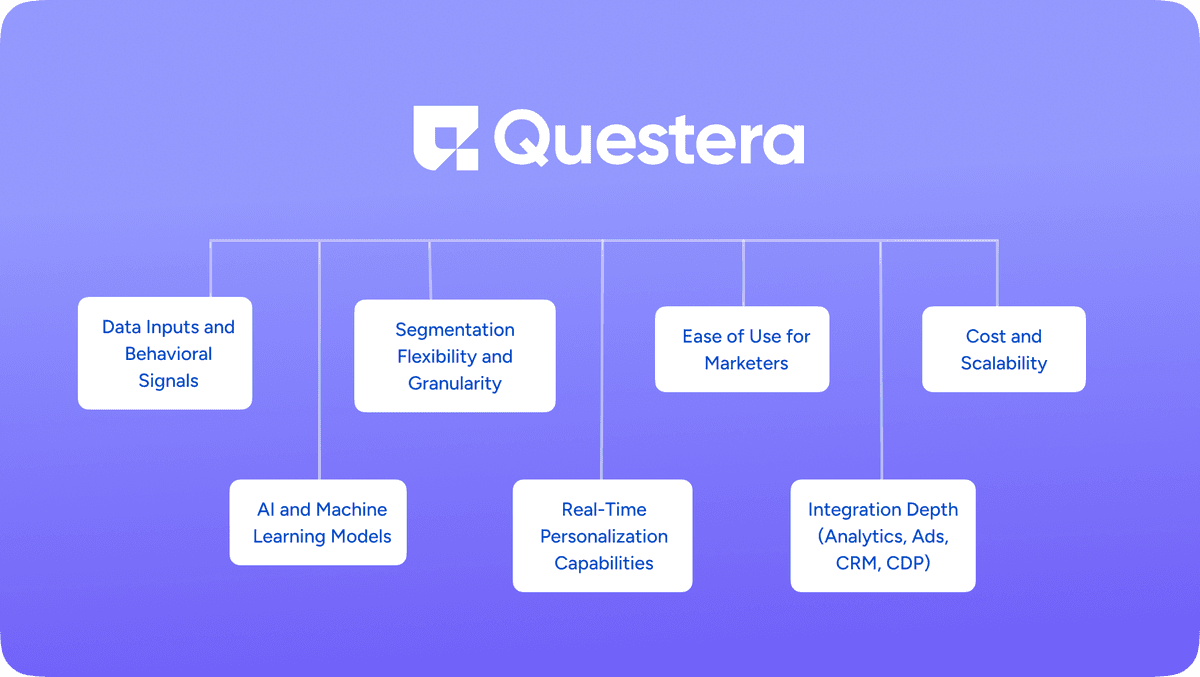
When comparing tools that offer smart segmentation, the focus must be on what goes into the outcome. The objective isn’t just to automate messages to a group of users. The goal is to engage in lifecycle email campaigns that adapt as users' behaviors change. Each lifecycle email marketing software has a different approach, so clarity is important here.
Data Inputs and Behavioral Signals
Any platform is only as good as the data inputs and behaviors it can understand in sending email. A handful of tools will track simple user actions like page views or clicks and think of them as behavioral signals. Others will drill deeper and analyze intent signals, session patterns, and timing behaviors. More robust signals produce more accurate customer lifecycle automation, because the system understands when a user shopping session is about to convert, continue to hesitate or disengage.
AI and Machine Learning Models
The real variation in email platforms shines in the way the platform learns. Some tools work based on rules set by marketers. Some of the more advanced systems use predictive models that adjust and learn based on newly emerging patterns. The goal of AI and machine learning models in lifecycle email campaigns is to use this data and intelligence to recognize when is the time to nudge, educate, or let the items speak for themselves. A good email campaign automation software needs to feel like thinking partner and not just a confirmation of your email campaign schedule.
Segmentation Flexibility and Granularity
Static segmentation places the user in one box, while predictive segmentation allows the user to move as behavior changes. A platform with sufficient granularity allows for segmentation that represents real human journeys. This is important in lifecycle email workflows with SaaS systems where audiences change rapidly.
Real-Time Personalization Capabilities
Real-time means that the message changes as the user changes. This is especially important in onboarding and retention email automations, where timing is often the deciding factor for conversion. The best lifecycle marketing email software should respond in real-time rather than a fixed interval.
Ease of Use for Marketers
Marketers need to be fast, and should not need to wait for someone in engineering. The interface needs to be easy to understand and not feel overwhelming. Lifecycle email marketing software should enable a team to work quickly, not hinder it.
Integration Depth (Analytics, Ads, CRM, CDP)
A robust platform has easy access to analytics dashboards, CRM systems, ad networks, and product data sources. The more deeply it integrates, the easier it will be to naturally personalize across all channels.
Cost and Scalability
Growth should not mean increased complexity or heavy maintenance. Any email marketing platform comparison should include the factor of scalability, especially if the team is considering future lifecycle email campaigns.
MoEngage: Strengths & Limitations
Strengths
- Strong campaign automation across mobile channels
- Good analytics dashboards
- Decent predictive scoring modules
Limitations
- Predictive segmentation can be slow to update
- Personalization depends heavily on manual rule setup
- Less flexible for real-time intent-based segmentation
Iterable: Strengths & Limitations
Strengths
- Good cross-channel orchestration
- Strong workflow builder interface
- Easy for marketing teams to adopt
Limitations
- Predictive capabilities are limited; leans more on lifecycle triggers
- Data import & data unification require strong internal infrastructure
- Real-time personalization still largely manual
Questera: Strengths & Differentiators
Strengths
- Agentic AI segmentation via SEGA (Segmentation Agent)
- Creates segments automatically based on behavior + intent + timing
- Real-time adjustments as user actions change
- Deep integration with analytics platforms + campaign channels
- Dynamic segments trigger immediate journeys (not batch updates)
Differentiators
- Fully self-optimizing segmentation
- Segments are not static lists, they evolve continuously
- Works seamlessly with other Quest Activators like ELMA + SARA + OMNIA
| Feature | Questera | MoEngage | Iterable |
|---|---|---|---|
| Real-Time Segmentation | Yes | Partial | Partial |
| Predictive Accuracy (Behavior + Intent) | High | Medium | Low |
| Agentic AI (Self-optimizing) | Yes | No | No |
| Ease for Non-Technical Teams | Yes | Yes | Yes |
| Multi-Channel Personalization | Yes | Yes | Yes |
| Data Integration Depth | Strong | Moderate | Requires Engineering |
Which Platform Should You Choose?
The ideal platform depends on how your users move, grow, and return. Every team is on the lookout for customer lifecycle email campaigns that show up in a timely and thoughtful manner. But how each lifecycle email marketing software handles segmentation impacts the end experience.
Choose Questera
Choose Questera if you are looking for real-time, self-updating and intent-based segmentation software. Questera modifies segments the very moment consumer behavior changes. This keeps customer lifecycle email automation from feeling contrived, and generates a very natural customer and supportive feel. Questera marries behavior signals with predictive insights and, as a result, every message happens in the right context. Questera is a strong match for teams searching for a customer lifecycle email workflows SaaS that automatically learns and adapts. Questera allows for customer onboarding email automation-to-retention, and doesn't require manual tuning of rules. If you want automation that learns in real time, Questera stands out in a very useful way.
Choose MoEngage
Choose MoEngage if your campaigns are mobile-first and depend heavily on app interactions. Its segmentation often updates in scheduled cycles, which works well for teams comfortable with periodic adjustments. It fits marketers who want stability and structured planning.
Choose Iterable
Choose Iterable if your priority is building and managing visual workflows. It works best as an email campaign automation platform where teams design defined journeys and scheduled triggers. It suits teams that prefer clear logic paths over dynamic prediction. In many email marketing platform comparison discussions, Iterable appears as the go-to for workflow simplicity.
Conclusion
Predictive segmentation is no longer a nice-to-have feature. It has become a core part of how brands create meaningful communication across the customer journey. Static lists and fixed segments cannot keep up with how quickly user behavior shifts today. Teams need platforms that understand intent, adapt in real time, and adjust messaging without constant manual effort. Questera, MoEngage, and Iterable each offer strong capabilities, but they serve different styles of marketing teams. If you want dynamic, behavior-aware automation that evolves with your users, Questera stands out clearly. If your focus leans toward mobile-driven messaging or structured workflow mapping, MoEngage and Iterable may be more familiar fits. The key is choosing the platform that supports how your users actually move, not how they used to.
FAQs
1. What is predictive segmentation?
Predictive segmentation groups users based on what they are likely to do next, using behavior patterns, engagement signals, and intent indicators. It adjusts segments as actions change, rather than keeping users in fixed lists.
2. How is predictive segmentation different from traditional segmentation?
Traditional segmentation relies on static attributes like age, location, or signup date. Predictive segmentation updates continuously based on real-time activity, interest signals, and purchase or churn likelihood.
3. Why does predictive segmentation matter for lifecycle email campaigns?
Because it ensures every message arrives at the right moment. When timing and context match user intent, engagement and conversions increase.
4. Which platform offers the most advanced predictive segmentation?
Questera stands out because it uses agentic AI to create self-updating, intent-driven segments that change as user behavior shifts.
5. Is predictive segmentation difficult to set up?
On platforms like Questera, most of the work is automated. Marketers can activate segmentation without deep data science or manual rule writing.
Ready to be a
10x Marketer?
See it in action