






Lovable vs Bolt vs Greta: The 2026 Pricing Breakdown (Token Costs Compared)
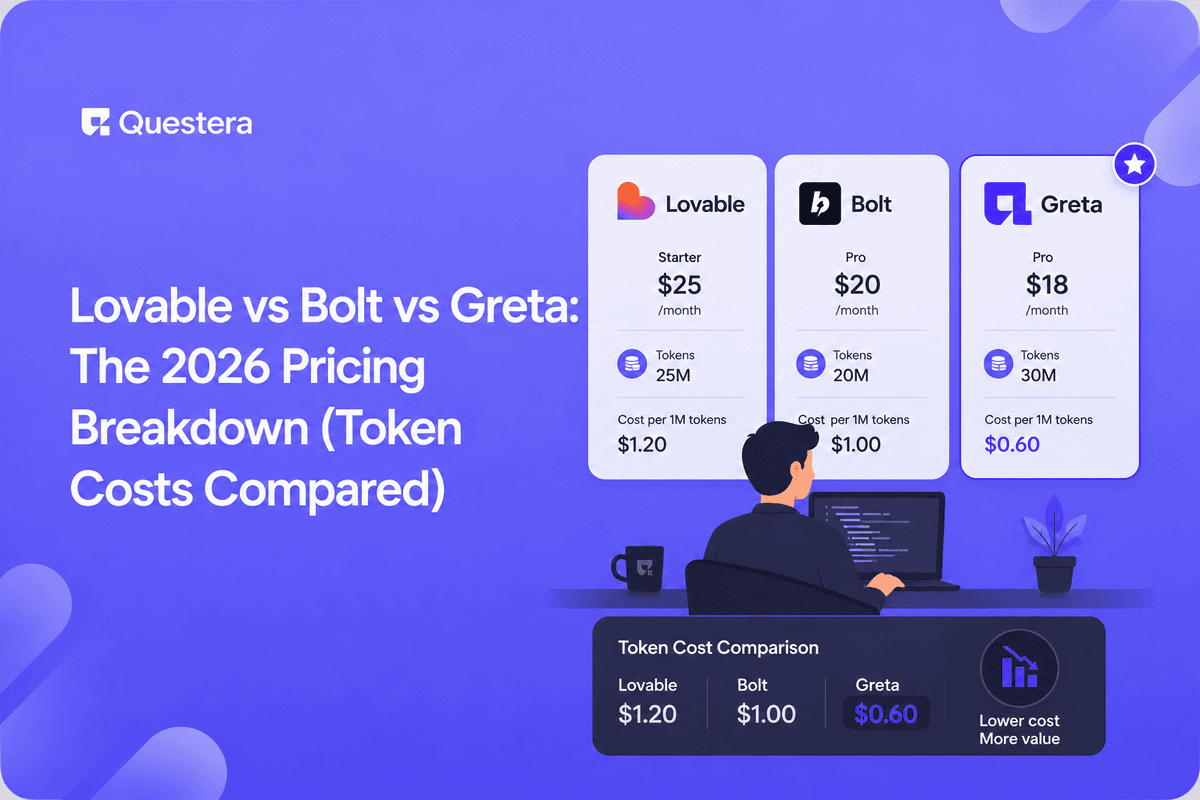
Lovable vs Bolt vs Greta pricing all use usage-based models built on tokens or credits, with monthly tiers and overage charges. True cost depends on how much you iterate, plus hosting and seats. Compare allowances, overage rates, and code ownership — not just headline prices — before choosing. Always verify current pricing on each site.
Comparing AI app builder prices is harder than it looks. Each tool advertises a tidy monthly tier, but the real bill turns on tokens, credits, and overages that scale with how much you build. That's where Lovable vs Bolt vs Greta pricing gets interesting. This guide breaks down how token-based pricing works across these tools and how to compare true total cost. Note: pricing changes often — always verify current numbers on each provider's official site before deciding.
How Does Token-Based Pricing Actually Work?
Most modern AI app builders meter usage in tokens or credits. Each prompt, generation, or build action consumes some, and your plan includes a monthly allowance. Exceed it and you hit overages or a hard stop.
Because heavy iteration burns the allowance faster, your effective cost depends on your building style — not just the sticker tier.
What Should You Compare Across Lovable, Bolt, and Greta?
Rather than chase exact dollar figures that change, compare the structural factors that drive cost. The table frames what to check on each provider's pricing page.
| Factor | What to Check | Why It Matters |
|---|---|---|
| Monthly tiers | Base price + what's included | Starting point only |
| Token/credit allowance | Units per tier | Caps how much you build |
| Overage rate | Cost past allowance | Drives bill spikes |
| Hosting | Included or separate | Hidden recurring cost |
| Seats | Per-user pricing | Adds up for teams |
| Code ownership | Export vs lock-in | Affects long-term cost |
Why Do Bills Differ So Much Between Users?
Two teams on the same tier can pay very differently because usage varies. A heavy prototyper who iterates constantly burns far more tokens than someone shipping a stable app, so overages — not the base price — dominate the bill.
This is exactly the dynamic detailed in our guide on the hidden costs of AI app builders. Understanding it is the key to comparing tools fairly.
How Does Code Ownership Change the Cost Equation?
If you can export and own your code, you're not locked into escalating platform fees — you can self-host or move when economics shift. That portability is a long-term cost factor that headline pricing ignores.
Among these tools, Greta emphasizes ownable, exportable code. For how scope differences also affect what you're paying for, see Greta vs Onlook.
Common Mistakes to Avoid
- Comparing only headline monthly prices across tools.
- Ignoring overage rates, which dominate heavy-iteration bills.
- Forgetting hosting and seats are often billed separately.
- Assuming usage will be light when prototyping is token-hungry.
- Overlooking code ownership, which shapes long-term lock-in cost.
Frequently Asked Questions
How do Lovable, Bolt, and Greta price their tools?
All use usage-based models built on tokens or credits, with monthly tiers and overage charges. Verify current specifics on each official site.
Want to try one of these? Start on Greta.sh — no setup, no boilerplate — just a prompt.Why is my bill higher than the advertised price?
Heavy iteration burns tokens or credits, pushing you past your allowance into overages. Hosting and seats can add more.
Which is cheapest?
It depends on your usage and team size. Compare allowances, overage rates, hosting, and ownership rather than headline price alone.
Does code ownership affect cost?
Yes. Owning and exporting code lets you self-host or switch, avoiding long-term lock-in to escalating fees.
Where do I find current pricing?
On each provider's official pricing page. Prices change often, so verify before deciding.
Key Takeaways
- All three use token- or credit-based, usage-driven pricing.
- Overages, hosting, and seats — not the base tier — drive real cost.
- Your iteration style determines your effective bill.
- Compare structure and ownership, and verify current pricing on each site.
Before you commit, map true cost — and favor a builder like Greta that lets you own your code to limit long-term lock-in.