






ELMA + Vibe Coding vs Klaviyo: Smarter AI Lifecycle Emails
Email marketing remains one of the most effective ways to generate revenue for your organization through digital channels, but the way you send your emails is now equally important. This post compares two approaches to creating lifecycle emails. On one hand, Questera's AI-driven email lifecycle marketing solution ELMA combined with Vibe Coding, Questera's exceptional approach to creating personalized messages for your customers without the need for code. On the other hand, there is Klaviyo's traditional approach to email marketing which has been proven successful for many organizations.
This post will cover capabilities of both products, real-world examples of how organizations are using both products to create their own lifecycle emails, the advantages and disadvantages of using both products and lastly recommendations for what type of team would be best served by each of the two solutions.
TL;DR
- Using ELMA with Vibe Coding offers marketers an opportunity to continuously optimize their lifecycle email content, timing and frequency via product signalling (i.e., actions taken by the customer) and AI, thereby eliminating the cost of and the need for maintaining large numbers of manual contact records.
- Klaviyo is an established platform specifically for e-commerce and offers superior integration, automation and segmentation capabilities compared to other email marketing solutions.
Difference between ELMA+Vibe Coding vs Klaviyo
Lifecycle email marketing systems provide more than just sending out scheduled messages:
- They can respond to events (i.e., behaviour-triggered messages).
- They can automatically create responses personalized to every customer (AI-powered email personalization).
- They can make choices on when to send messages and what to include (i.e., an e-mail marketing system's automated lifecycle emails).
- They allow a marketing team to create their marketing strategy without the need for ongoing technical support (no-code email marketing automation).
These four pillars are the foundation of this comparison.
Core approach: ELMA + Vibe Coding vs Klaviyo
ELMA + Vibe Coding- agentic, adaptive, no-code friendly
What ELMA is?
ELMA (Email Lifecycle Marketing Agent) is Questera’s lifecycle email marketing agent that claims to continuously optimize journeys by watching real-time engagement signals and tuning content, timing, and frequency automatically. It’s positioned as an AI email marketing platform that pushes marketers beyond static flows.
What “Vibe Coding” adds?
Vibe Coding is the user-facing way to express rules, tone, and conditional content without traditional code- think of it as a no-code behavioral logic + tone layer that instructs ELMA how to react to user states. That setup focuses on rapid iteration and letting AI handle day-to-day decisioning.
How it behaves in practice
ELMA identifies lifecycle hooks (signup, activation, churn risk) and generates or updates multi-step flows automatically.
It runs continuous experiments and adjusts content per recipient, which aims to boost engagement with minimal manual A/B testing.
Build this with a prompt on Greta.sh — describe the app, Greta writes and deploys it.Klaviyo- data-first automation and segmentation
What Klaviyo is good at?
Klaviyo is a data-rich ecommerce marketing automation platform built around real-time customer profiles, event data, and flexible flow builders. It’s designed for precise behavior-triggered emails (cart abandon, browse, post-purchase, etc.) and strong segmentation, plus AI tools for send-time optimization and subject-line/content suggestions.
How it behaves in practice?
Marketers construct flows (welcome, cart-abandon, win-back) and wire them to product events. Klaviyo's KDP (data platform) keeps profiles current so triggers are reliable.
Klaviyo
It enables deep manual control- custom splits, conditional filters, manual content blocks, which teams use to finely tune messaging and measure lift.
Feature-by-Feature Comparison
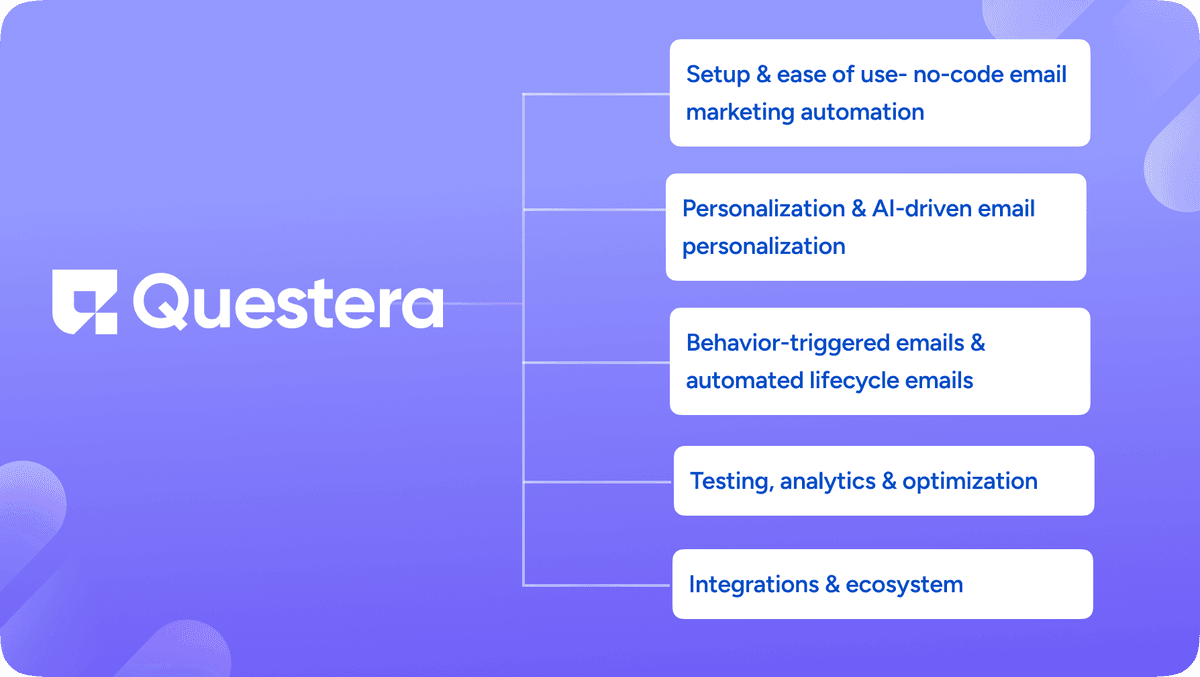
1. Setup & ease of use- no-code email marketing automation
ELMA + Vibe Coding: Built to be conversational and agentic. Non-technical users can tell ELMA objectives and Vibe Coding expresses behavior/tone without writing code; good for teams that want automated lifecycle emails with minimal engineering.
Klaviyo: Visual flow builder with lots of knobs. Easier for marketers who like “drag-and-drop” control, but complex branching still requires time and expertise.
Edge: ELMA for speed & lower engineering touch; Klaviyo for precise manual control.
2. Personalization & AI-driven email personalization
ELMA: Built to auto-personalize at scale using agent reasoning — tailoring message body, cadence, and send logic for each user. Ideal for teams prioritizing ongoing optimization.
Klaviyo: Provides dynamic content, product recommendations, and AI-assisted subject lines and send-time optimization. Proven and deeply integrated into ecommerce stacks.
Edge: Tie — ELMA leans more autonomous; Klaviyo offers strong, transparent personalization tools.
3. Behavior-triggered emails & automated lifecycle emails
ELMA: Detects lifecycle events and adapts flows automatically. Reduces stale flows and reacts quickly to product or behavioral shifts.
Klaviyo: Market-standard for behavior triggers — reliable, flexible, and well-documented. Automated flows are known to drive strong revenue outcomes.
Edge: ELMA for adaptive automation; Klaviyo for reliability and predictable performance.
Want to try one of these? Start on Greta.sh — no setup, no boilerplate — just a prompt.4. Testing, analytics & optimization
ELMA: Focuses on continuous optimization using agentic learning. Less manual testing — the agent iterates and improves automatically.
Klaviyo: Rich analytics and A/B testing, with visibility into flow performance and revenue per recipient. Favored by teams needing explicit experiment control.
Edge: ELMA for automated experiments; Klaviyo for manual precision and reporting depth.
5. Integrations & ecosystem
ELMA (Questera): Designed to ingest product data first; integrations vary but focus on analytics + product-signal inputs.
Klaviyo: Extensive, mature integrations with Shopify, BigCommerce, custom APIs, and thousands of ecommerce tools — a major adoption advantage.
Edge: Klaviyo for the integration ecosystem; ELMA for product-signal-driven setups.
Real-world trade-offs & risk checklist
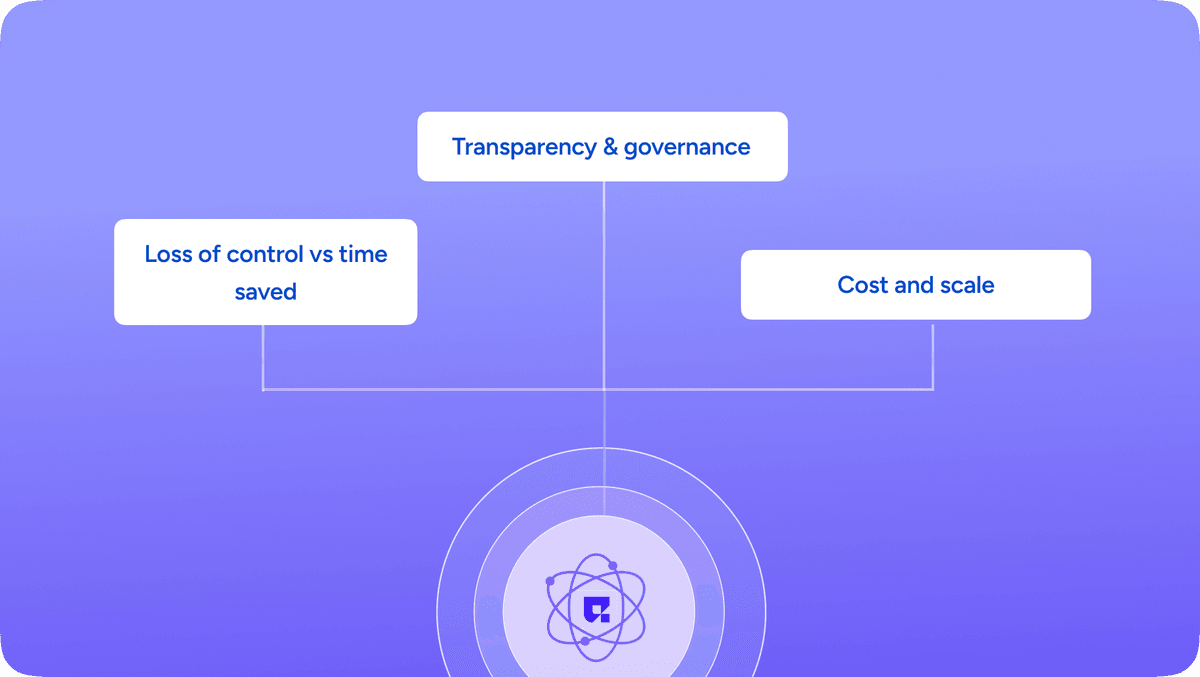
1. Loss of control vs time saved
ELMA’s agentic model can free marketers from repetitive decisions but may reduce granular control. Klaviyo keeps control in human hands, more work, but more predictability.
2. Transparency & governance
If auditability and explainability matter (compliance-heavy environments), Klaviyo’s explicit rules and logs are easier to inspect. ELMA’s automated decisions need clear guardrails and monitoring.
3. Cost and scale
Platforms price differently (subscriber counts, message volume). Also consider engineering and maintenance costs- agentic automation can reduce ops overhead but may require trust investments.
Ready to ship? Open Greta.sh — your idea → a working app, in one chat.Conclusion & Recommendation
If your team wants to move beyond rigid workflows and tap into AI-driven email personalization that learns, adapts, and improves on its own, ELMA + Vibe Coding clearly delivers the smarter approach. Instead of relying on static branches or manual rule updates, ELMA continuously adjusts timing, tone, content, and triggers based on real user behavior. This gives your lifecycle marketing a level of intelligence and momentum that traditional platforms often struggle to match.
Meanwhile, Klaviyo remains a dependable choice for brands that prefer heavy manual control, established ecommerce templates, and a familiar flow builder. It’s powerful, but it still requires marketers to maintain rules, redesign journeys, and constantly optimize content by hand. For teams with limited time or limited bandwidth, that can slow down experimentation and growth.
Where Questera shines is in long-term adaptability. As your product evolves, user patterns shift, and new lifecycle moments emerge, ELMA updates itself- removing the operational burden of rebuilding flows again and again. This makes Questera a strong Klaviyo alternative for teams aiming for retention, higher engagement, and long-term lifecycle strength.
A simple test will show the difference clearly:
Run a short proof-of-concept where ELMA auto-manages just one lifecycle journey (like a welcome or reactivation flow) while your existing stack- including Klaviyo- manages everything else. Over 6–8 weeks, compare three things:
- Revenue per recipient
- Engagement uplift across segments
- Hours saved from not maintaining flows manually
Most teams quickly see that while Klaviyo is solid, Questera’s ELMA delivers gains that compound over time, especially for brands that want sustainable, automated lifecycle growth rather than one-off spikes.
If you’re building for the future of lifecycle marketing, ELMA + Vibe Coding is the stronger strategic choice.
FAQs
1. What makes ELMA + Vibe Coding different from Klaviyo?
ELMA uses agentic intelligence to adjust emails automatically based on real-time behavior. With Vibe Coding, marketers can guide tone, logic, and intent without writing code. Klaviyo is strong for ecommerce brands but relies heavily on manual flows, segmentation, and testing.
2. Is Questera’s ELMA an AI email marketing platform?
Yes. ELMA is built as a true AI email marketing platform designed to learn from user actions, update journeys continuously, and personalize content at scale without constant human intervention.
3. Can ELMA handle behavior-triggered emails like Klaviyo?
Absolutely. ELMA handles behavior-triggered emails using product usage signals, engagement patterns, and lifecycle milestones. Unlike static triggers in traditional tools, ELMA updates these triggers automatically as user behavior changes.
4. Does Klaviyo offer AI-driven email personalization?
Klaviyo includes AI-powered features like smart send-time optimization and subject-line suggestions. However, ELMA offers deeper AI-driven personalization because it analyzes real-time behavior and dynamically adjusts messaging for each user.
5. Is Questera a good Klaviyo alternative?
Yes—especially if your team wants fewer workflows and more automation. Questera’s ELMA reduces manual setup and maintenance, making it a strong Klaviyo alternative for retention-driven brands that prefer adaptive, automated lifecycle emails.
6. Do I need technical help to use ELMA + Vibe Coding?
Not at all. Vibe Coding is designed for no-code email marketing automation. Marketers can define behavior logic, tone, and personalization instructions in simple, human-friendly language.





© 2026 Questera
Follow in Google