






How to Build a Real Estate Listing App with AI in 2026
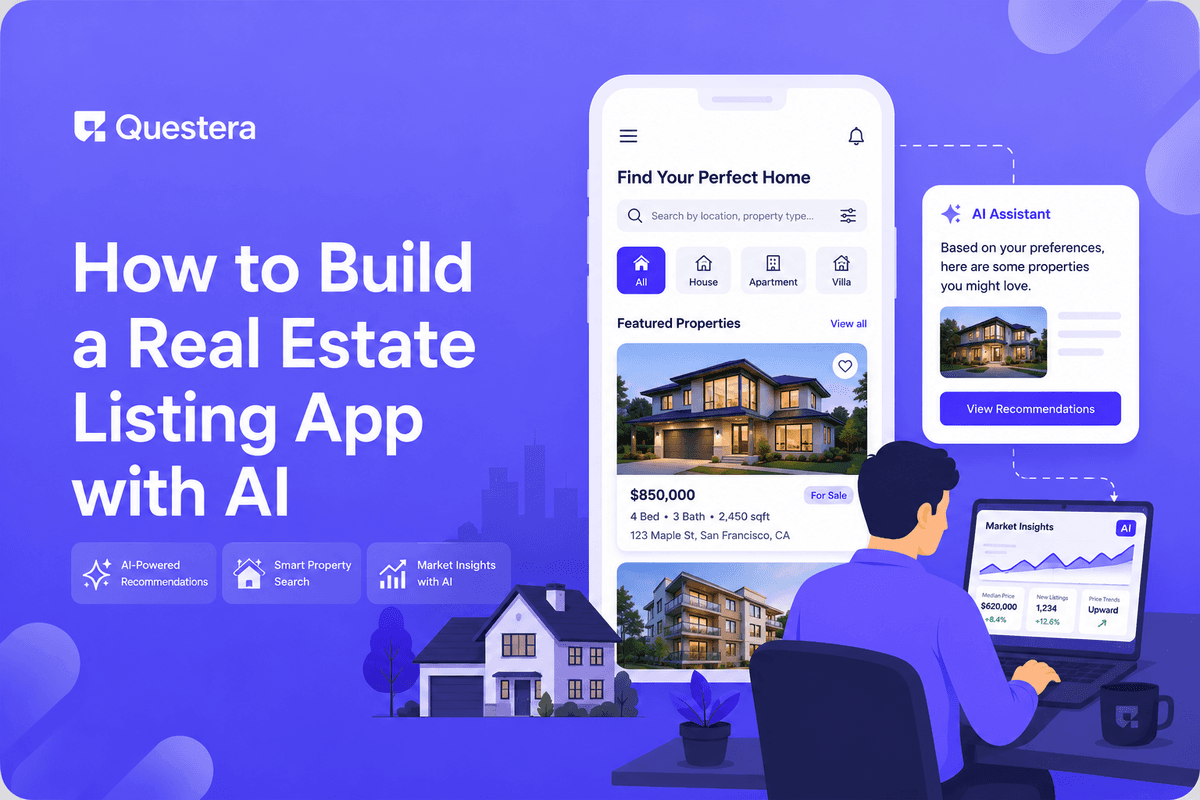
Real estate listing apps used to require deep engineering work. In 2026, AI app builders compress the build to 2–4 days for the core experience — property search, map view, lead capture, agent attribution, and saved searches. The harder work isn't the build; it's MLS access, compliance with IDX rules and fair housing law, and the niche differentiator that makes your listing app stand out from Zillow and Redfin. This guide covers the realistic build, the MLS integration path, the compliance lines that matter, and the niche-fit patterns that let solo founders and small brokerages compete with the category giants.
In 2026, the economics flipped — not for competing with Zillow head-on (still impossible) but for niche-fit listing apps serving specific audiences. Solo agents with branded private listing portals. Niche brokerages serving specific geographies or property types. Vertical apps for specific buyer profiles (first-time buyers, investors, luxury, foreign buyers). AI app builders compress the core build to 2–4 days; the differentiator is niche selection and execution discipline.
Important: This Isn't Legal or Compliance Advice
Real estate is regulated. MLS license terms, IDX rules per region, fair housing law (FHA, ECOA), state real estate commission regulations, data privacy laws (CCPA, others), and brokerage compliance requirements all apply. This guide describes general patterns; consult qualified counsel and your broker before deploying a real estate listing app that touches MLS data, generates leads, or facilitates real estate activities.
What Real Estate Listing App Categories Exist
Solo Agent Listing Portal
- Branded site (yourname.com) with the agent's listings plus MLS-area-wide search
- Lead capture flows attribute leads back to the agent
- Agent-driven content (neighborhood guides, market updates, agent profile)
- Sometimes white-labeled from a brokerage tech stack
Niche Brokerage Listing Portal
- Brokerage-branded site showing all brokerage listings plus area-wide search
- Multi-agent attribution and lead routing
- Featured brokerage agents and listings
- Local market positioning
Vertical Listing Apps (Specialized)
- Luxury — High-end properties with concierge-quality UX
- Investor — Properties with ROI, cap rate, rental data
- Foreign buyers — Localized for specific international markets
- First-time buyers — Educational content alongside listings
- Senior living — Properties matched to senior-specific needs
- Vacation rentals — Properties with rental income projections
Core V1 Scope
What to Build
- Property search with filters (price, bedrooms, bathrooms, square footage, type)
- Map view with property pins
- Property detail pages with photos, description, agent contact
- Saved searches and email alerts
- Lead capture forms with agent attribution
- User accounts for saved properties and search history
- Mobile responsive (critical — most buyers browse on phones)
- MLS integration (the central technical question)
- Niche differentiator (the feature horizontal portals don't have)
What to Skip in V1
- Native mobile apps — PWA suffices for v1; native later if validated
- User-generated content (reviews, ratings) — Compliance and moderation complexity; defer
- Mortgage calculators — Standard feature but commoditized; add later
- Live chat — Use email/forms initially; add live chat only when traffic justifies staffing
- Virtual tours integration — Useful but optional; add as listings demand
- Multi-language — Start with one language; expand if niche demands
- School ratings integration — Often gated by paid APIs; add when validated
MLS Integration: The Central Question
MLS (Multiple Listing Service) data is the lifeblood of real estate listing apps. Access is gated, regulated, and varies by region. The path determines what's actually possible.
Access Requirements
- Real estate license + MLS membership (typical for solo agents — access through their brokerage)
- Brokerage MLS access (typical for brokerage portals)
- MLS vendor agreement (if you're a vendor building tech for licensed agents/brokers)
- IDX (Internet Data Exchange) license — required for displaying MLS listings publicly
- VOW (Virtual Office Website) license — required for behind-login features (e.g., showing sold prices)
Technical Access Options
- RETS (Real Estate Transaction Standard) — Traditional MLS feed; still common in many regions
- RESO Web API — Modern REST API standard; increasingly available
- Bridge Interactive — Aggregator API access to multiple MLSes (paid service)
- MLS Grid — Modern MLS data API in several regions
- Spark API (FBS) — Modern MLS platform
- Direct MLS API — Some MLSes have their own APIs
IDX Display Rules to Follow
- Required attributions — Listing brokerage name shown with each listing
- MLS attribution required (varies by MLS — sometimes a specific logo)
- Update frequency — Listings refresh within MLS-specified interval (often 4–24 hours)
- Listing status restrictions — Sold, withdrawn, or off-market listings may have specific display rules
- No reselling MLS data
- Derivative works rules — What you can and can't create from the data
Honest framing: MLS integration adds 1–3 weeks of compliance and integration work to your project. For licensed agents working with their brokerage's existing MLS access, the path is straightforward. For non-licensed builders, MLS access requires partnering with a licensed entity or working through a vendor program. Plan accordingly.
Compliance Considerations
Fair Housing (FHA, ECOA, State Laws)
- Federal and state laws prohibit discrimination in housing
- Listing apps must not facilitate or enable discriminatory practices
- AI features that recommend listings need fair housing audits — could be flagged as 'steering' if they show different listings to different demographic groups
- User-facing language must not include protected-class-targeting terms
- Document AI logic for any feature making recommendations
State Real Estate Commission Rules
- Each US state has different rules for real estate marketing and advertising
- Required disclosures (broker name, license number)
- Records retention requirements
- License requirements for who can perform what activities
Data Privacy and RESPA
- CCPA (California), Texas Data Privacy and Security Act, Virginia CDPA, other state laws
- GDPR if international users
- Real estate searches reveal sensitive intent data (looking to move, life events)
- If your listing app facilitates payment between real estate professionals (referral fees, lead sales), RESPA applies
- Restrictions on kickbacks and unearned referral fees
The 2–4 Day Build Sequence
Day 1: Core Listing App
- Hour 1-2: PRD (niche, target audience, MLS access plan, lead capture strategy)
- Hour 3-4: Scaffold the data model — Property, Listing Agent, User (Buyer), SavedSearch, SavedProperty, Lead
- Hour 5-6: Build property list view with filters
- Hour 7-8: Build property detail pages with photo gallery and lead capture
Day 2: Map View, Search, Saved Searches
- Hour 1-3: Map view with property pins (Mapbox or Google Maps API)
- Hour 4-5: Saved searches with email alerts when new matching properties arrive
- Hour 6-7: Saved properties for logged-in users
- Hour 8: Email integration for alerts and lead notifications
Day 3: MLS Integration
- Hour 1-4: MLS data integration (RETS or RESO Web API)
- Hour 5-6: Property data mapping and normalization
- Hour 7-8: Display attributions and IDX compliance setup
Day 4: Niche Differentiator, Polish, Launch
- Hour 1-3: Build the niche differentiator (whatever makes your app unique)
- Hour 4-5: Mobile responsive refinement
- Hour 6: SEO setup — meta tags, schema.org for properties, sitemap
- Hour 7: Compliance review — IDX attributions, fair housing audit, disclosures
- Hour 8: Soft launch to 5–10 buyers in your niche
Niche Differentiators That Win
For Luxury Properties
- High-quality photography presentation with full-screen galleries
- Concierge-quality contact flows
- Lifestyle content (neighborhood guides, schools, amenities)
- Sold prices visible to verified users
For Investors
- ROI and cap rate calculations
- Rent comp data overlay
- Tenant occupancy and turnover history (where available)
- Cash flow projections by financing scenario
For First-Time Buyers
- Mortgage pre-approval integration
- Educational content embedded in search flow
- Cost breakdowns (down payment, monthly, closing)
- First-time buyer program eligibility flagging
For Foreign Buyers
- Multi-currency pricing
- Multi-language interface
- Foreign buyer financing options
- Tax implications guidance
AI Features That Genuinely Help
- AI-drafted property descriptions from photos and MLS data
- AI summary of neighborhoods for buyers exploring new areas
- AI-personalized property recommendations (with fair housing audit)
- AI Q&A chatbot answering common buyer questions
- AI image enhancement for listing photos
- AI translation of property descriptions for international buyers
AI Features to Approach Carefully
- AI valuations — Liability implications; humans should review
- AI buyer profiling — Fair lending concerns; document logic
- AI lead scoring — Potential discriminatory effects; audit before deploying
- AI automated negotiations — Significant liability
Lead Capture and Routing Patterns
- Property-specific contact form — Pre-filled with property details
- Saved search subscription — Email captures buyer intent
- Schedule a tour — Calendar integration with agent availability
- Mortgage pre-approval CTA — Lead enters pre-approval process
- Lead routing rules — Geography, agent specialty, round-robin, lead source
- Speed to lead — Sub-5-minute response increases conversion ~5×
- Lead nurture drip — Email sequence for non-converted leads
Distribution for Real Estate Listing Apps
- SEO for specific neighborhoods and property types — Long-tail high-intent searches
- Google Business Profile for local presence
- Niche-specific social media (Instagram for luxury, LinkedIn for investors)
- Partnerships with mortgage brokers, attorneys, financial planners
- Direct outreach to brokerage owners (B2B)
- Local sponsorships (community events, niche publications)
- Influencer partnerships with local agents and real estate creators
- Paid search ads on bottom-of-funnel keywords (high cost; only when ROI clear)
Monetization Patterns
| Model | Pattern | Best For |
|---|---|---|
| Lead generation | Sell leads to agents | B2B platforms — review RESPA implications |
| Featured listings | Agents pay for premium placement | Multi-agent portals |
| Agent subscription | Agents pay monthly for portal access | Brokerage tech tools |
| Premium membership | Buyers pay for premium features | Investor tools, foreign buyer tools |
| Affiliate | Mortgage, insurance, services referrals | Mind RESPA and Truth in Advertising |
| Direct brokerage commission | License as brokerage, earn commission on closings | Owned brokerages building tech |
Common Mistakes Building Real Estate Listing Apps
- Trying to compete with Zillow on breadth — Impossible without massive capital. Compete on niche fit instead.
- Skipping MLS access planning — Without MLS data, your listing app shows nothing or stale data. Plan it first.
- Underestimating compliance — IDX rules, fair housing, state regulations, RESPA all apply. Get review before launching.
- Building for desktop first — Most buyers browse on phones. Mobile-first is mandatory.
- Generic UX — Without a niche differentiator, you're a worse Zillow. Pick a niche and own it.
- Skipping speed-to-lead — Slow lead response loses conversions. Build automation for instant lead capture and routing.
- Mishandling photos — Property photos are the most important UX element. Optimize, lazy-load, CDN-deliver.
- Ignoring SEO — Real estate is SEO-driven category. Skip SEO setup and traffic stays at zero.
- Not capturing buyer intent — Lead capture beyond just contact forms (saved searches, alerts, tour scheduling).
- Skipping the harden phase — Real estate users include high-net-worth buyers; bugs lose trust permanently.
Frequently Asked Questions
Can a non-licensed person build a real estate listing app?
Yes for the tech itself. Selling the app to brokerages, providing real estate advice, or facilitating transactions may require licensing. Most non-licensed builders partner with licensed brokers or build vendor-mode tools.
How do I get MLS access?
Through your licensed brokerage if you're an agent. Through MLS vendor programs if you're a tech vendor. Each MLS has its own application process. Plan 2–4 weeks for MLS access negotiation.
Why not just use Zillow's data?
Zillow doesn't provide listing data via public API for full listing apps. Their API has limited use cases (Zestimates, etc.) and terms restrict usage. For real listing apps, MLS access via IDX or similar is the path.
How do I avoid fair housing issues with AI recommendations?
Audit every AI feature for potential discriminatory effects across protected demographic groups. Document training data and decision logic. Have legal counsel review AI features that filter or rank listings differently for different users.
What about the cost of MLS access?
Variable. Brokerage MLS membership typically $200–$1,000/month bundled with other services. MLS vendor licenses range from a few hundred dollars/month to thousands depending on MLS and scope. Bridge Interactive aggregator pricing depends on volume.
Can I monetize via lead generation?
Yes, with care. RESPA restricts referral fees between settlement service providers. Direct fees for buyer leads (not tied to settlement services) are generally permitted; consult counsel for specific patterns. Lead marketplaces for real estate have RESPA exposure that requires careful structuring.
How do I compete with Zillow's brand recognition?
You don't, on brand. You compete on niche fit — solo agents serving specific clients win because they understand the niche deeply. Niche listing apps win for the same reason: deep workflow fit that Zillow's horizontal product doesn't deliver.
Real estate listing apps in 2026 are buildable in 2–4 days for the core, but MLS access (1–3 weeks of negotiation), compliance (IDX, fair housing, state rules), and niche selection are the real work. Don't compete with Zillow horizontally. Compete on niche fit — luxury, investor, first-time buyer, foreign buyer, specific geographies. Mobile-first is mandatory. AI features genuinely help in specific places (descriptions, summaries, translation, chatbots). Pick your niche this week, run the MLS access conversation with your brokerage or vendor program, build once MLS access is sorted, and soft launch to 10 buyers in your niche.





© 2026 Questera
Follow in Google