






AI App Builders for Real Estate Agencies
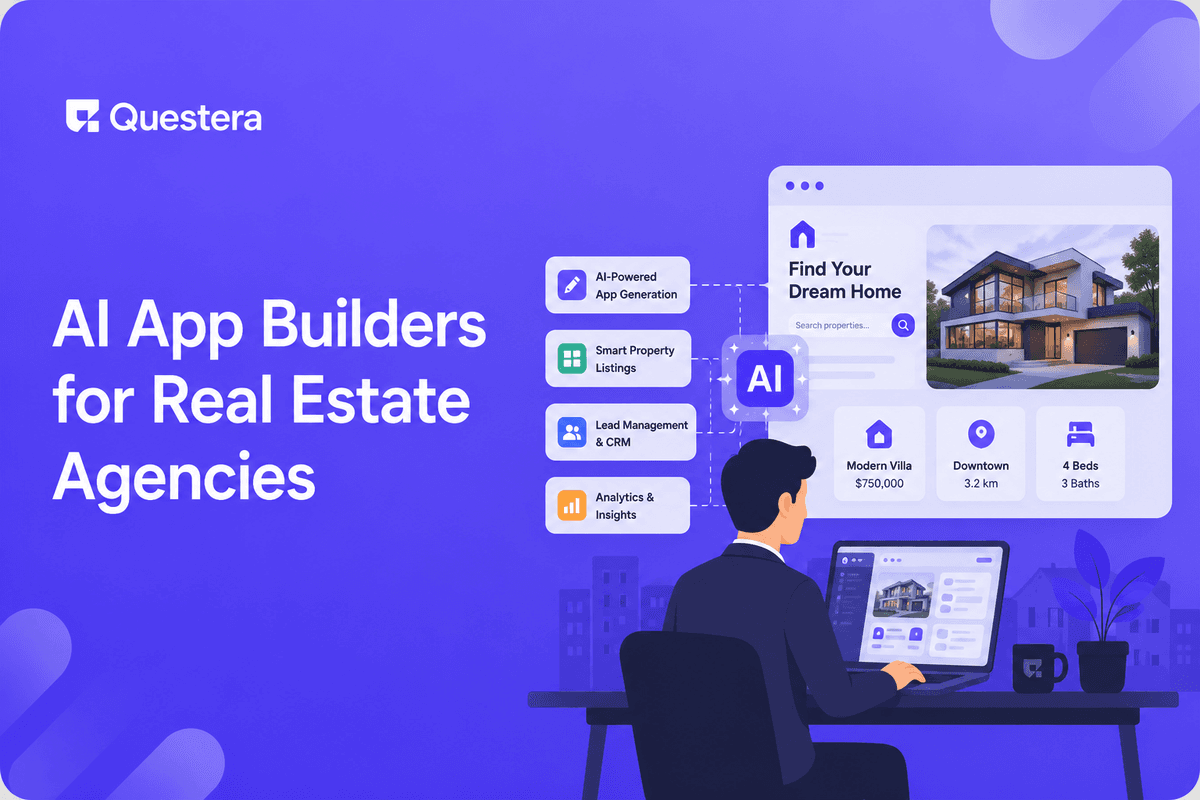
Real estate agencies have been over-paying for generic CRMs and listing tools for years. Salesforce, kvCORE, Sierra Interactive, BoomTown — powerful for some teams, painfully expensive and over-featured for most independent brokerages and small teams. AI app builders change the economics. Custom listing portals, niche-fit CRMs, lead routing tools, and transaction management dashboards now build in 1–3 days at a fraction of the SaaS subscription cost.
Introduction
Real estate is one of the highest-spend categories on generic SaaS that doesn't quite fit. The category leaders — kvCORE, Sierra Interactive, BoomTown, Salesforce Real Estate Cloud — charge $300–$1,500/agent/month for features that solo agents and small brokerages typically use 15–20% of. Spreadsheets, sticky notes, and a thousand different tools cobbled together for the rest.
The 2026 alternative: build the specific tools you need with AI app builders. Listing portals, niche CRMs, lead routing tools, transaction management dashboards — all build in 1–3 days at a fraction of the SaaS cost. The result: tools that fit how your agency actually works instead of forcing your workflow to fit the SaaS.
Important: This Isn't Legal or Compliance Advice
Real estate is regulated at federal, state, and local levels. RESPA, MLS rules per region, state real estate commission regulations, fair housing laws (FHA, ECOA), data privacy laws, and brokerage compliance requirements all apply. Consult qualified legal counsel and your broker before deploying real estate tech that touches client data, listings, or transactions.
What Real Estate Agencies Can Build
Listing Portals (Private MLS-Aware Sites)
- Branded property search experience pulled from MLS feed (via RETS or MLS-grid API where available)
- Map-based property browsing with school district, walkability, neighborhood overlays
- Saved searches and alert subscriptions for buyers
- Property detail pages with photos, virtual tours, neighborhood data, and lead capture
- Agent attribution — leads route back to the agent whose link the buyer used
Niche Real Estate CRMs
- Contact management with real estate-specific fields (Buyer, Seller, Past Client, Sphere)
- Listing inventory tied to seller clients
- Buyer needs analysis with criteria-based property matching
- Pipeline by transaction stage (Initial Consultation → Listing Agreement → Listed → Under Contract → Closed)
- Commission tracking and split calculations
- Drip email campaigns by client type and stage
Lead Routing and Follow-Up Tools
- Inbound lead capture from website, Zillow, Realtor.com, Facebook leads
- Automatic routing rules (round-robin, geography, price-range, agent specialty)
- Speed-to-lead tracking — how fast did the agent respond? (Sub-5-min response increases conversion ~5×)
- Follow-up cadence enforcement — Auto-create tasks for next touchpoint
- Drip campaigns by lead source and type
Transaction Management Dashboards
- Per-transaction checklist (offer accepted → inspection → financing → appraisal → closing)
- Document tracking (signed offer, inspection report, appraisal, closing disclosure)
- Critical date tracking (inspection deadline, financing deadline, closing date)
- Party coordination — Buyer, seller, lender, title company, inspector, appraiser all visible
- Automated reminders for upcoming deadlines
MLS Integration: The Central Question
MLS Data Access Options
- RETS (Real Estate Transaction Standard) — Traditional MLS data feed format
- MLS-Grid API — Modern REST-based API for MLS data, available in many regions
- Spark API (FBS) — Modernized MLS data access platform
- Third-party aggregators (RESO, Bridge Interactive) — Cleaner APIs sometimes
MLS Access Requires
- Active MLS membership (typically via your brokerage)
- MLS-specific data license agreement (their terms; signed before access)
- Compliance with MLS rules on data display (IDX rules — what listings can show, attribution required)
- Often: technical credentials tied to a specific app or domain
MLS Data Display Rules (IDX)
- Required attributions — Listing brokerage and MLS often need to be displayed
- Update frequency requirements — Listings must update within specified intervals (often 4–24 hours)
- No reselling of MLS data
- Specific restrictions on derivative works
Compliance Considerations
RESPA (Real Estate Settlement Procedures Act)
Federal US law governing settlement services (closings, escrow, title). Prohibits kickbacks and unearned referral fees among settlement service providers. If your product takes any commission, referral fee, or revenue share related to settlements, review with counsel.
Fair Housing (FHA, ECOA)
Federal laws prohibiting discrimination in housing and credit. Affects AI features that might inadvertently discriminate. Document AI training data and decision logic for any feature making recommendations. State-level fair housing laws often more restrictive than federal.
State Real Estate Commission Rules
- Each US state has a real estate commission with its own rules
- License requirements for who can perform what activities
- Records retention requirements (typically 3–7 years for transactions)
- Advertising rules (e.g., agent name + brokerage required in ads)
Data Privacy
- CCPA (California) — Client data privacy rights
- Texas Data Privacy and Security Act, Virginia CDPA, other state laws
- GDPR if any clients are EU-based
- Real estate data includes financial info, contact info — treat with high care
The 1–3 Day Build Sequence (for a Niche Real Estate CRM)
Day 1: Spec and Core CRM
- Hour 1–2: PRD (agency size, transaction volume, specific workflow, MLS integration scope)
- Hour 3–4: Scaffold contacts (Buyer, Seller, Past Client), companies (Builder, Lender, Title Co.), and transactions
- Hour 5–6: Add listings module with photos, MLS#, price, commission split fields
- Hour 7–8: Pipeline view by transaction stage
Day 2: Lead Routing, Follow-Up, MLS Integration
- Hour 1–2: Lead capture form on website; integration with Zillow/Realtor.com leads if applicable
- Hour 3–4: Lead routing rules (round-robin or geography-based)
- Hour 5–6: MLS data pull (if your brokerage has access) and property display
- Hour 7–8: Drip email campaigns for new leads
Day 3: Transaction Management, Polish, Launch
- Hour 1–3: Transaction checklist templates and per-transaction instances
- Hour 4–5: Document upload and tracking
- Hour 6: Mobile responsive (agents use phones constantly in the field)
- Hour 7: Soft launch to one or two agents in your brokerage
- Hour 8: Iterate based on first feedback
AI Features That Genuinely Help Real Estate
- AI-drafted listing descriptions from MLS data and photos
- AI summaries of property notes for client briefings
- AI-drafted follow-up emails based on contact context
- AI matching of buyer criteria to new listings (with fair housing audit)
- AI summarization of inspection reports for client communication
- AI translation for multilingual client communication
AI Features to Skip or Approach Carefully
- AI lead scoring — Fair lending and fair housing implications; review carefully
- AI buyer recommendations that filter — Could create steering issues; legal review essential
- AI valuation/pricing — Liability implications; humans should remain in the loop
- AI automated negotiation — Significant liability; better to assist humans than automate
Distribution: Reaching Real Estate Agencies
- Local Realtor associations — Sponsorship and presence at local meetings
- Real estate-specific conferences (NAR conferences, Inman, regional events)
- Real estate newsletters (Inman News, Notorious POP, Real Estate Tech News)
- Direct outreach to brokerage owners (smaller brokerages, 5–25 agents, are best targets)
- Real estate podcasts (numerous; pick ones with engaged audiences)
- Affiliate partnerships with real estate coaches and trainers
Pricing Patterns That Work
| Audience | Pricing Pattern | ARPU |
|---|---|---|
| Solo agent | Subscription $50–$150/month | $600–$1,800/year |
| Small brokerage (5–10 agents) | Per-agent $30–$80/month | $1,800–$9,600/year |
| Mid-size brokerage (10–50 agents) | Per-agent $25–$60/month | $3,000–$36,000/year |
| Solo broker tools (transaction mgmt) | Per-transaction $25–$100 | $2,500–$25,000/year |
Honest framing: real estate has high price tolerance for tools that demonstrably increase conversion or save agent time. Niche-fit tools that genuinely solve a specific workflow can command premium pricing.
Common Mistakes Building Real Estate Tech
- Skipping the MLS integration discussion — Without MLS access, most real estate tools are limited. Plan it.
- Underestimating compliance — Real estate is regulated at multiple levels. Get legal review before commercializing.
- Treating fair housing casually — AI features that filter or recommend differently to different demographics create legal exposure.
- Skipping mobile UX — Agents work from phones constantly. Mobile responsive is mandatory.
- Trying to compete with kvCORE on breadth — Compete on niche fit instead.
- Building real estate tech without a licensed advisor — Get input from at least one practicing agent or broker.
- Mishandling client financial info — Real estate touches sensitive data. Treat security as production-level from day one.
Frequently Asked Questions
Can a non-licensed person build real estate tech for agencies?
Yes for the tech building itself. Selling the tech to brokerages, providing real estate advice, or facilitating settlements may require licensing depending on what the product does. Consult counsel.
How do I get MLS access?
Through your brokerage if you're licensed. Through brokerage partnerships if you're a vendor. Some MLSes have vendor programs. Plan MLS access into your product roadmap before launching.
How do I avoid fair housing issues with AI features?
Audit every AI feature for potential discriminatory effects. Document training data sources. Test outputs across demographic groups. Have legal counsel review before launching AI features that filter, recommend, or rank listings.
What's the right niche within real estate?
Several work: solo agents and small brokerages underserved by enterprise tools, specific geographies, specific transaction types (commercial, luxury, first-time buyer), workflow tools (transaction management, lead routing, marketing automation). Pick narrow.
Key Takeaways
- Real estate agencies have been overpaying for generic SaaS. AI app builders enable custom listing portals, niche CRMs, lead routing, and transaction management at a fraction of the cost.
- MLS integration is the central technical question. Plan MLS access through your brokerage or vendor partnership before building.
- Compliance matters seriously — RESPA, fair housing, state real estate commission rules, data privacy. Get legal review before commercializing.
- Distribution to real estate agencies works through industry-specific channels — local Realtor associations, conferences, niche newsletters, direct outreach to brokerage owners.





© 2026 Questera
Follow in Google